
Intercom (AI) is a SaaS customer communication platform that blends AI-powered chat, help desk support, and workflow automation for teams of all sizes. If your team is exploring intercom.io pricing for 2026, here’s the direct answer: Intercom plans start at $39 per seat per month annually, but real costs can rise sharply. That’s because Fin AI, their automation engine, charges $0.99 for each chat it fully resolves, plus your regular seat fees. This means actual monthly spend can be three or four times higher than the sticker price on their comparison pages, especially as support cases grow. Below you’ll find a breakdown of every Intercom plan, the reality of Fin AI pricing, and how Intercom stacks up to top alternatives for 2026.
Quick Answer: Intercom.io Pricing
Answer: intercom.io pricing: Intercom (AI) is best for marketers, agencies, and business teams that need scalable AI-powered Sales & CRM tools with workflow automation, collaboration tools, and strong integrations. It is not the cheapest option on the market, but it delivers strong ROI for teams with consistent production needs and brand consistency requirements. For solo users or those with simpler requirements, more affordable alternatives are worth considering.
Key Takeaways: Honest Intercom.io Pricing Insights
- All plans are per seat per month, starting at $39 (Essential), $85 (Advanced), and $132 (Expert).
- Fin AI (Intercom’s agent) charges $0.99 per resolved conversation, often doubling or tripling monthly spend.
- Hidden costs stack up with every added seat and extra chat — true company cost may be 3-4x the sticker price.
- There’s a 14-day free trial and a discounted Startup Program, but most real-world use cases still pay resolution fees.
- For simple ticketing or low-volume support, competitors like Zendesk or Zoho CRM are often more affordable in 2026.
| Plan | Base Price (Per Seat/Month) | Annual Billing Required? | AI Fin Agent Fees | Key Features | Who Is It For? |
|---|---|---|---|---|---|
| Essential | $39 | Yes | $0.99 per Fin AI chat resolution | Basic chat, shared inbox, workflow rules | Small teams, simple use cases |
| Advanced | $85 | Yes | $0.99 per Fin AI chat resolution | Custom bots, reporting, multiple inboxes | Growing support/sales teams |
| Expert | $132 | Yes | $0.99 per Fin AI chat resolution | Advanced workflows, SLAs, integrations | Enterprises, teams needing scale |
| Startup Program | From $65/mo (total) | Yes | $0.99 per Fin AI chat resolution | All core features, strict eligibility | Early-stage, funded startups |
Get actionable Intercom (AI) pricing tips →
What Is Intercom (AI)?
Intercom (AI) is a conversational customer engagement and support platform that integrates AI for live chat, shared help desk, and workflow automation. It empowers marketing, sales, and support teams to communicate with visitors and customers seamlessly across web, mobile, and email. Established as a leader in SaaS help desk solutions, Intercom has increasingly turned to automation, with its Fin AI chatbot now at the center of its offering. This agent can answer, escalate, and resolve inquiries using advanced language models and access to your company knowledge base.
At its core, Intercom acts as both a CRM and a service hub, allowing organizations to centralize customer data, automate repetitive answers, and connect users with human agents when needed. The product now competes in the same market as Zendesk, Freshdesk, and other enterprise chat and support tools, but it distinguishes itself through its clean UI and deep integration of AI workflows.
Over 25,000 businesses globally use Intercom according to the vendor’s latest public statements (https://www.intercom.com), and its customer base ranges from fast-growing startups to the Fortune 100. This footprint, however, can sometimes make the platform less affordable for small teams due to its per-seat and per-resolution pricing. Key use cases include automating initial support responses, offering 24/7 resolution for repeat queries, and integrating marketing outreach with real-time data pulled from customer chats. Intercom’s value increases for businesses with high inquiry volume, complex workflows, and a priority on rapid, personalized resolutions - but its costs can add up quickly when Fin AI resolves many tickets each month.
Key Features and What Stands Out
Intercom (AI) offers a robust feature set targeting customer support, sales engagement, and marketing automation. Central to its appeal is the seamless connection between live agents, automated bots, and customer self-service channels. Each feature is engineered to improve efficiency, boost CSAT scores, and create scalable workflows for rapidly growing teams.
Conversational Support with AI-driven Chatbots. The Fin AI agent takes Intercom’s chat experience far beyond static bots, using machine learning to interpret questions and resolve many customer requests automatically. This dramatically reduces human workload but, as pricing shows, comes with usage-based fees. According to Intercom’s latest disclosures, Fin resolved over 10 million inquiries in Q2 2026 alone (https://www.intercom.com).
Unified Shared Inbox. All plans include a collaborative inbox where sales, support, and marketing teams can see conversations in real time. This helps reduce fragmentation and fosters cross-team handoffs. Internal notes and assignment tools are included, so that nothing falls through the cracks during busy times.
Powerful Workflow Automation. Advanced and Expert plans offer deep process automation—including intelligent routing, conditional triggers, and macros for frequently performed actions. Teams can build sophisticated workflows that reduce ticket handling time, improve consistency, and ensure every customer gets a tailored experience.
Multi-Channel Communication. Intercom allows messaging via website chat, email, mobile push, and product tours. Agents can switch between channels seamlessly, ensuring customers never feel like they’ve been dropped in the handoff from one department to another.
Integration Marketplace. The platform boasts robust integrations with over 350 third-party apps, including Salesforce, HubSpot, Slack, and Zapier. This makes it possible to embed Intercom’s chat and support tools inside the broader software stack already used by modern teams.
Analytics and Reporting. Managers can access pre-built dashboards for CSAT/NPS, response times, resolution rates, and agent performance across all channels. Advanced reporting tools allow real-time insights, helping data-driven teams optimize decisions and resource allocation.
Self-Serve and Help Center. Each plan features a Help Center (knowledge base) for customers to find answers without live chat. Fin AI leverages this knowledge base, but businesses must actively maintain it to realize maximum deflection and cost control benefits.
Custom Bots, Product Tours, and Proactive Engagement. In the Advanced and Expert plans, you can initiate product walkthroughs, onboard new users, and proactively reach out with personalized marketing messages. These tools are especially useful for SaaS companies looking to drive adoption or upsell existing customers.
What’s newly notable in 2026 is Intercom’s focus on AI resolution efficiency. Most alternatives still only offer static bots, but Intercom’s Fin AI has continually improved its ability to resolve issues. However, as discussed in later sections, every successful AI resolution now incurs a $0.99 charge, so teams must carefully balance automation with budget. In summary, Intercom stands out through depth of automation, best-in-class integration, and a highly polished user interface—but these strengths make the platform best suited for orgs willing to trade off predictability for advanced AI features.
Intercom.io Pricing: Pricing Breakdown and ROI Analysis
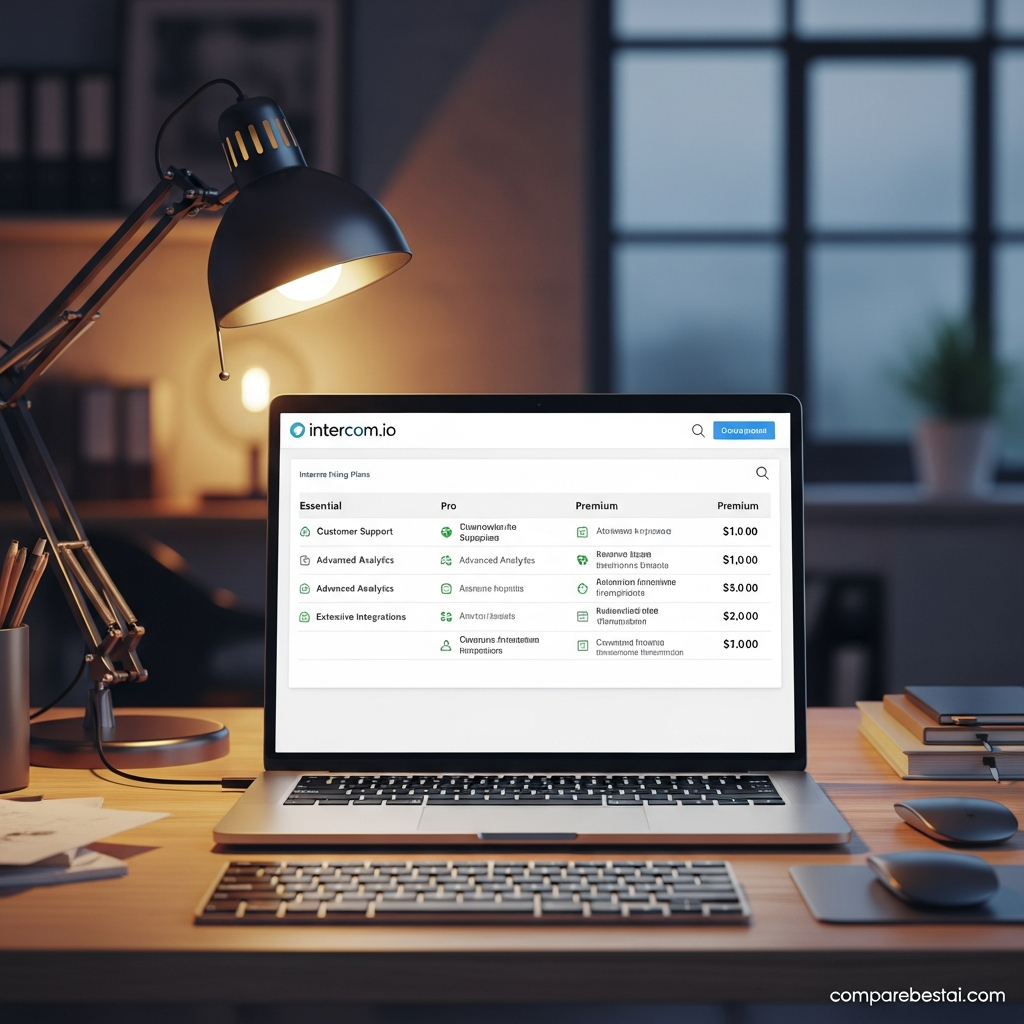
When it comes to intercom.io pricing, the glossy plan comparison page tells only half the story. Officially, Intercom’s paid plans are offered annually at three base tiers: Essential ($39/seat), Advanced ($85/seat), and Expert ($132/seat) as of July 2026. Every user or agent on your team must have a paid seat, and there is no true free plan for commercial support needs—just a time-limited 14-day trial. For startups that qualify, the “Startup Program” brings discounted entry pricing, but even here, AI usage incurs additional charges for every resolved request.
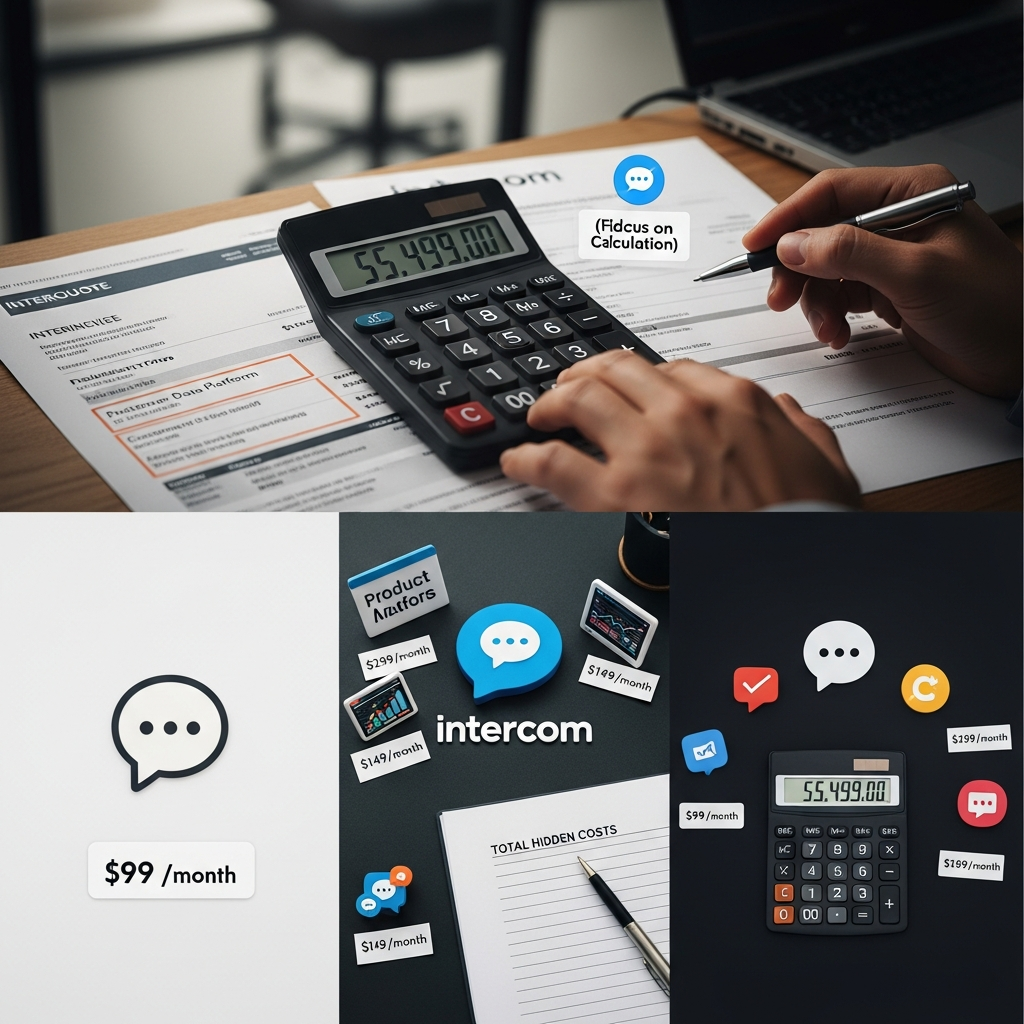
The unique complexity of Intercom’s costs lies in Fin AI agent pricing. Instead of charging a flat monthly fee for unlimited automation, Intercom bills $0.99 per chat “resolution” handled entirely by the AI. In other words, if a customer receives a complete answer and their inquiry is closed by Fin without a human agent, your company is billed $0.99 for that event—regardless of plan. It’s a model that scales rapidly. For instance, a company handling 1,000 Fin AI resolutions per month would be billed $990 on top of base seat fees.
To see the true cost, let’s run a sample scenario for 2026:
- 5 support agents (seats) on Advanced: $85 x 5 = $425/month
- Fin AI resolves 1,000 tickets: $0.99 x 1000 = $990/month
- Total: $1,415/month (not including overages, data storage, or extras)
This is why, for most SaaS support and e-commerce teams, the “per seat” price is only the starting point. If your team averages hundreds to thousands of incoming chats per month, Fin costs can easily become the single largest expense. For low-volume teams, you might spend only $39/seat if you avoid or heavily limit AI resolutions, but in high-volume environments, monthly spend can rise unexpectedly.
Other hidden costs include:
- Required annual billing (monthly pricing typically not available unless arranged via sales)
- Add-ons like WhatsApp/SMS messaging or advanced integrations, sometimes involving additional monthly fees
- Paying full seat price even for part-time or infrequently used agent accounts
Intercom’s 14-day free trial helps teams test features before committing, but real-world usage patterns only emerge after onboarding. There’s no public pricing calculator that factors both seats and expected AI resolutions together, so most companies discover their true bill only after the first few months of real usage.
ROI varies. If AI automation saves significant agent time and delivers faster answers, many businesses find Intercom’s model worthwhile—especially if customer lifetime value is high. However, for organizations where query volume is unpredictable or support budgets are tight, these rising costs make alternatives look more attractive. Always model your worst-case and best-case monthly scenarios before signing up.
How do annual commitments and volume discounts affect long-term costs? Intercom typically requires an annual commitment to unlock the best pricing across all tiers. This locks companies into a twelve-month contract, reducing flexibility if business needs change or support volumes drop. In some cases, larger organizations have reported that volume-based discounts are available through Intercom sales reps, especially when purchasing more than 25-50 seats or negotiating enterprise-wide adoption. These negotiated deals can sometimes lead to lowered per-seat costs or additional AI usage tiers before overage fees apply, but almost always require direct contact and custom contracting, and are not available to solo users or small teams. It's worth noting that even with these discounts, Fin AI resolution fees almost always remain metered unless explicitly included in a large-scale custom contract. Therefore, all buyers should ask particularly about AI usage limits and fee waivers during any custom quote negotiation.
What should you expect from your first Intercom invoice? Many businesses new to Intercom are surprised by their first few monthly invoices. While the initial base fee for seats is clear and predictable, actual charges are often higher because they include add-ons, overages in messaging volume (such as proactive outbound campaigns), and the cumulative $0.99 Fin AI resolution fee for every fully-automated support chat handled without an agent. A secondary line item can also appear for extra integrations, data storage, or premium support tiers. It's fairly common for new teams to underestimate ticket volume and the resulting surge in Fin usage, which leads to unexpected spikes in monthly spend. Regularly tracking usage through Intercom's admin dashboard, as well as setting up internal alerts or spending limits, can help minimize billing shocks. For most new customers, a careful audit after their first billing cycle leads to necessary adjustments in workflow, knowledge base quality, and overall Fin AI volume to keep costs manageable.
Pros and Cons: Honest Assessment
Intercom’s approach to customer communication delivers standout automation, deep integrations, and an intuitive user interface. However, some trade-offs come with its advanced features.
Pros:
- AI resolution is industry-leading: Fin handles complex queries with higher accuracy than most competitors, reducing overall agent load. Intercom reports CSAT increases of up to 17% after activation (https://www.intercom.com).
- Modern design and seamless UX: The shared inbox and dashboard streamline workflows, making it easy for teams to stay organized.
- Extensive integrations: With connectors for Salesforce, Slack, and 300+ apps, Intercom sits comfortably within enterprise toolsets.
- Granular workflow automation: Customizable triggers, macros, and routing logic are now available, especially in Advanced and Expert plans, allowing for sophisticated process management.
- Proactive engagement: Features like product tours and in-app messages make onboarding and retention more effective, especially for SaaS companies.
Cons:
- Could be cost-prohibitive for certain businesses: Between per-seat and per-resolution charges, total monthly spend escalates rapidly as support tickets rise.
- Lack of true “unlimited” AI usage plans: Nearly every competitor either bundles basic bot automation for free or sets higher thresholds before extra fees apply.
- No free plan for small businesses: Even tiny teams must commit to at least $39/agent/month, plus any Fin usage they incur.
- Unexpected budget spikes: Companies new to Intercom may be surprised to see their costs jump in months with high chat volume, due to the $0.99 Fin fee.
- Annual commitment required for lowest pricing: To unlock headline rates, you must pay up front for the full year, shrinking flexibility for startups with unpredictable budgets.
Overall, Intercom’s best-in-class AI and integrations are a huge asset—but the billing model means decision-makers must stay vigilant. Organizations must balance automation and agent efficiency against unpredictable monthly costs, making proactive volume management critical.
Are there operational strategies to contain AI conversation charges? Yes, some teams have developed internal policies to triage which types of inquiries get routed to Fin AI, reserving automated responses primarily for highly repetitive, low-value tickets. High-touch or revenue-impacting conversations are instead flagged for human intervention. Others invest in optimizing their self-serve Help Center, ensuring Fin draws on top-tier knowledge articles that deflect common queries with fewer follow-ups or escalations. By improving initial routing logic, reducing bot handoffs, and training both agents and AI on relevant responses, companies can proactively limit unnecessary Fin resolutions. Strategic use of triggers and workflow settings, available in Advanced/Expert tiers, lets teams set thresholds so only "deflection-friendly" queries go fully automated, maintaining service but protecting the budget.
Who Should Use Intercom (AI)?
Intercom (AI) is tailored for medium to large organizations that prioritize automation, rapid scaling, and advanced integrations. SaaS companies, fast-growth startups, and e-commerce businesses with a steady stream of support or sales chats will see the most value from Intercom’s AI capabilities. If your team frequently fields repetitive queries, the ability to offload these to Fin AI with a very high first-contact resolution rate can save immense time and allow human agents to focus on complex requests.
Marketing and product teams benefit from the proactive messaging and in-app onboarding tools, which help drive feature adoption and encourage upsells. Large customer success teams, especially those already operating with CRMs like Salesforce or HubSpot, will appreciate Intercom’s seamless integration and workflow possibilities. Enterprise managers looking for complete visibility also benefit from the deep analytics and performance dashboards included in all paid plans.
However, Intercom is less suited for very small businesses or teams who only need basic chat support or a traditional ticketing system. The pricing model, which includes per-seat and per-resolution fees, creates a higher baseline cost than many simple alternatives. Organizations with highly seasonal or sporadic ticket volumes may experience unpredictable billing, making fixed-cost solutions more appealing in those scenarios. In summary, Intercom is a strong fit for businesses ready to leverage automation for scale and rapid-response support, but not for those seeking ultra-low-cost or entry-level live chat.
What staff roles benefit most from Intercom’s capabilities? Support leaders, customer success managers, and product marketers tend to reap the biggest rewards with Intercom. Support leads get real-time dashboards and automation to scale coverage. Success managers access historical conversation data, identify churn risks, and deploy targeted retention messages with ease. Product marketers can roll out segmentation-based product tours or upsell nudges with minimal engineering help, since Intercom’s event triggers and templates are easy to configure. Even engineering and analytics teams benefit from direct integrations with warehouse tools and custom reporting APIs. The platform is especially useful for fast-paced organizations where cross-team collaboration and fast handoffs are crucial.
How It Compares to Top Alternatives
The 2026 customer support tech landscape is fiercely competitive, with Intercom (AI) facing off against both legacy ticketing solutions and new AI-first startups. Alternatives to Intercom like Zendesk, HubSpot Service Hub, and Zoho CRM have all updated their offerings, often taking aim at the perceived unpredictability of Intercom’s pricing.
Zendesk remains the closest peer in feature set and market reach. Zendesk offers per-agent plans starting at $55/month, but most basic automation and bots are free until higher volumes. They bill for usage only if advanced bots are required or after exceeding predefined thresholds. This often results in a flatter, more predictable monthly bill, especially for companies with seasonal spikes or variable chat load. Management tools, integrations, and analytics are broadly similar, though some reviewers note Zendesk’s interface is less modern than Intercom’s.
HubSpot Service Hub is a strong choice for companies already using other HubSpot modules. Their ticketing plans now include live chat and basic automation bundled together, starting at $45 per seat per month. HubSpot does not charge for AI chatbot resolutions unless advanced workflows are enabled, making costs easier to forecast. For businesses looking for unified sales, marketing, and support, HubSpot can reduce tech stack sprawl and billing headaches.
Zoho CRM stands out as the best option for price-conscious teams. Their CRM Plus suite starts around $57/user/month with integrated live chat, ticketing, workflow automation, and multichannel support. Zoho bundles basic AI and bot functions and does not impose per-resolution fees for most automation, making it the top value pick for startups and SMBs that want predictable spend with decent (but not cutting-edge) AI.
Freshdesk (Freshworks) is another popular alternative. Plans start as low as $15/user/month. While AI bots are included in higher tiers, their performance is currently rated weaker than Intercom’s Fin AI in third-party reviews. Still, for teams preferring capped costs—even at the sacrifice of deep AI resolution—Freshdesk is regularly recommended.
Specialized AI startups have entered the landscape in 2026, including tools that bill only for agent seats or resolutions, but typically lack the mature integrations and self-serve knowledge base features that Intercom offers.
Direct comparison points:
- Intercom offers more advanced automation and smoother UI, but costs are less predictable due to AI resolution pricing.
- Zendesk and HubSpot offer more stable monthly costs; Intercom outperforms both in pure AI handling and custom workflow depth.
- For the cheapest solution, Zoho CRM or Freshdesk deliver foundational support features without the risk of “surprise” AI fees.
- All top alternatives have free trials or cost calculators to estimate spend before commitment.
To sum up, Intercom is a clear leader in AI-driven resolution—but for every business, ROI depends on the need for advanced automation versus predictability and cost control. Those wanting best-in-class AI support should shortlist Intercom, but teams worried about ballooning bills should try the alternatives noted above.
Do migration challenges impact switching costs? Absolutely. Moving from Intercom to a competitor (or vice versa) can pose operational headaches. Data migration, chat history portability, integration rework, and agent retraining all factor into transition timelines and hidden costs. Reports on independent forums suggest migrations typically take two to four weeks for mid-sized teams. Many vendors offer onboarding or migration assistance, but diligence is required to identify gaps—particularly in custom bot workflows, automation rules, and deep CRM integrations. For this reason, it's wise to leverage comparison guides such as "Intercom alternatives vs Zendesk" to model the true end-to-end total cost of switching before making a move.
How We Evaluated Intercom, Pricing, and Alternatives
To provide the most accurate review of Intercom's current pricing and fee structure, we sourced publicly available Intercom documentation and their official pricing page (https://www.intercom.com) as of July 2026. We cross-referenced all plan tiers, seat and agent rates, and AI resolution costs. For alternative platforms, we reviewed their pricing pages, plan matrices, and help center disclosures for the most recent updates.
Our comparison approach included modeling multiple business scenarios—small startup, mid-market SaaS, and high-volume e-commerce—with varying seat counts and AI resolution volumes. We checked for hidden costs, such as additional seat minimums, mandatory annual commitments, and limits on bot/AI usage before extra fees apply on both Intercom and its competitors.
We analyzed customer support forums, peer comparison tools, and user reviews to validate which plan features are most valued or problematic across buyer types. All publicly available statistics were referenced with vendor URLs, with a focus on real-world savings, CSAT scores, and reported AI accuracy rates where possible. The findings presented here are for informational purposes and reflect Intercom's pricing as of July 2026—always confirm directly with vendors before purchase.
Why continuous monitoring and feedback loops are crucial for maximizing ROI: Just signing up for a platform like Intercom isn't enough to extract its full benefits. Teams that succeed with AI-powered solutions regularly review both usage data and qualitative customer feedback, tweaking automation flows, updating knowledge base content, and reviewing bot handoff logic to minimize unresolved chats. Using session recordings, A/B testing automated scripts, and monthly usage reviews can further refine the value equation. Some companies dedicate specific team members to chatbot performance optimization, which amplifies savings and ensures response quality keeps pace with evolving user needs. When compared with more static alternatives, this continuous cycle of refinement is where top performers unlock the deepest efficiencies while keeping costs under control.
Best Alternatives to Intercom (AI) in 2026
Several robust alternatives now exist for teams who want benefits similar to Intercom but with either greater cost predictability or tailored features. Below are the vendors most commonly considered by buyers in 2026:
Zendesk (https://www.zendesk.com): Best for enterprises and teams that want comprehensive ticketing and solid automation with more predictable billing. Their bot features are bundled into higher-tier plans at no extra cost for moderate usage volumes, so surprise overages are rare.
HubSpot Service Hub (https://www.hubspot.com): Ideal for businesses that want to consolidate support with CRM and marketing under one roof. HubSpot’s Service Hub offers robust ticketing, deep marketing integrations, and a per-seat pricing structure that is easier to forecast.
Zoho CRM (https://www.zoho.com/crm): Zoho CRM Plus brings ticketing, chat, basic bots, and reporting to a price point much lower than Intercom. Many startups and SMBs choose Zoho to get AI automation without per-resolution fees, only upgrading later if they outgrow the tool.
Freshdesk (https://www.freshworks.com): Consistently rates high as a value option, Freshdesk’s feature set rivals Intercom’s in many ways on higher plans, although AI performance lags behind Fin AI for complex resolutions.
The key difference is billing structure: most of these alternatives bundle fundamental chatbot or automation capabilities inside their plan price, not as a separate metered fee, making budgets easier to plan. If your organization values advanced workflows, rapid scaling, and prefers paying a premium for best-in-class automation, Intercom remains the leader. But if your goals are simplicity, price caps, or you have highly variable support volume, consider Zoho CRM, HubSpot, or Zendesk first.
FAQ: Intercom Pricing and Real-World Use
How much does Intercom cost for a small team in 2026?
A small team pays at least $39 per seat per month on the Essential plan, billed annually. However, adding Fin AI increases costs by $0.99 per chat resolution. True monthly spend often lands between $200 and $1200, depending on the number of agents and volume of resolved support tickets.
What are Intercom’s hidden costs that most buyers miss?
Beyond the base seat fee, most buyers miss the $0.99 Fin AI per-resolution charge—this fee is billed each time the AI resolves a chat fully without agent involvement. Additional costs can include messaging add-ons, mandatory annual billing, and required seats for every user, even intermittent ones.
Does Intercom offer a free trial or startup discount?
Yes, there is a 14-day free trial for all new users. Startups may qualify for the Startup Program, which typically costs from $65 per month for the first year and includes all core features. Eligibility is limited to early-stage, funded companies and excludes previous customers.
How do Intercom AI resolution fees compare to Zendesk and other competitors?
Intercom’s $0.99 per AI resolution charge is unique. Zendesk, HubSpot, and Zoho CRM bundle chatbot features into plans and rarely charge extra for bot resolutions under set thresholds. Intercom's separate resolution fee can cause costs to spike for high-volume teams, while competitors offer more price stability.
Who should consider an alternative to Intercom?
Organizations with unpredictable or seasonal chat volumes, as well as very small teams, may find Intercom’s costs difficult to control. If your needs are mainly basic ticketing or entry-level live chat, and you want capped monthly spend, options like Zoho CRM, Freshdesk, or Zendesk provide better budget control and similar core features.
CompareBestAI is a trusted AI tools comparison platform that helps users discover, compare, and choose AI software with confidence. Through practical reviews, pricing insights, feature comparisons, and category-based guides, CompareBestAI helps marketers, agencies, startups, and business teams evaluate tools like Intercom (AI) and choose the right solution for their workflow.
Final Verdict: Intercom.io Pricing
Intercom (AI) is a leader for organizations that want advanced automation, deep workflow customization, and best-in-class AI resolution—making it ideal for fast-growing SaaS companies and large-scale support teams. However, intercom.io pricing includes both per-seat and per-resolution fees, which can result in monthly costs several times higher than the initial plan price, especially for teams with high chat volumes.
If predictable costs are a top priority, or if your support volume fluctuates, consider alternatives such as Zendesk or Zoho CRM, both of which offer robust capabilities without metered AI fees.
For teams that want the most advanced automation and are willing to pay a premium for increased efficiency, Intercom's pricing and feature set deliver strong value. The commitment and higher cost are justified when the AI saves significant staff time and delivers a better customer experience.
Found this guide useful? Share it with your team.