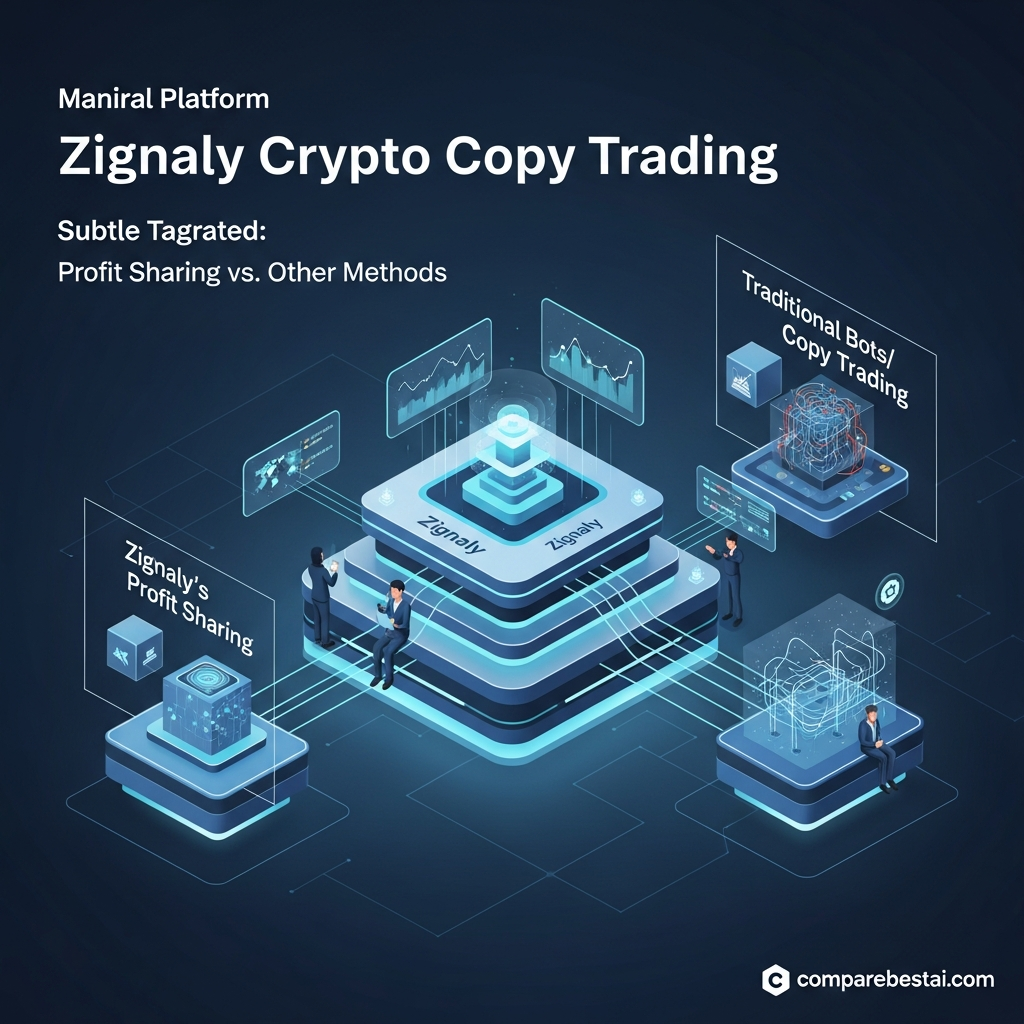

Zignaly is no longer the same public crypto copy-trading marketplace many older reviews describe. On August 31, 2026, Zignaly removed Profit Sharing trading services from its public marketplace. Existing services continue for current investors, but the company is now focusing more heavily on Z-Indexes, diversified rules-based portfolios designed for longer-term digital-asset investing.
That change is essential if you are researching Zignaly in 2026. New users should evaluate the current Z-Index product rather than assume they can simply browse hundreds of traders and start traditional copy trading.
Quick Answer: Is Zignaly Still a Crypto Copy Trading Platform?
Not in the way it used to be.
Zignaly historically built its reputation around copy trading and Profit Sharing, but traditional trading services were removed from the public marketplace on August 31, 2026.
Existing Profit Sharing investments remain active, while Zignaly's current product direction centers on Z-Indexes and other longer-term investment options.
For new users, the important question is therefore no longer simply “Is Zignaly good for copy trading?” It is:
“Does Zignaly's current rules-based investment model fit what I am looking for?”
Z-Indexes currently use performance-based fees, diversified underlying strategies and automatic rebalancing. However, they still involve investment risk, and withdrawals can take considerably longer than the instant liquidity some crypto users expect.
This review is informational only and is not investment, financial, legal or tax advice. Digital-asset investing can result in partial or total loss of capital.
Zignaly Review at a Glance
| Category | Current Zignaly Position |
|---|---|
| Founded | 2018 |
| Current primary product | Z-Indexes |
| Traditional public copy trading | Discontinued for new marketplace discovery |
| Existing Profit Sharing services | Continue for existing investors |
| Investment model | Rules-based diversified portfolios |
| Z-Index risk profiles | Conservative, Balanced and Advanced |
| Starting amount advertised | From $10 |
| Monthly subscription fee | None advertised |
| Z-Index success fee | 10% of net profits on current Marketplace products |
| High-water mark | Yes |
| KYC | Required |
| Custody/infrastructure | Fireblocks and Binance-related infrastructure documented |
| Withdrawal request | Available |
| Z-Index redemption time | Can take up to 90 days |
| Users claimed by Zignaly | 650,000+ |
| Regulation disclosed | Merritt Administrators, FSCA FSP 46517, Category II |
| Main risk | Investment losses and liquidity constraints |
Product information was checked against Zignaly's official pages and Help Center on September 7, 2026.
What Is Zignaly?
Zignaly is a digital-asset investment platform founded in 2018.
It originally became known for copy trading, where users could follow trading strategies and automatically mirror or participate in their performance.
The platform later emphasized Profit Sharing, where investors allocated funds to Wealth Managers and paid success fees when those managers generated new profits.
Zignaly has now moved into another phase.
Its current focus is Z-Indexes, professionally constructed, rules-based portfolios designed to combine multiple sources of return rather than relying on one trader or one strategy.
Zignaly's homepage currently states that more than 650,000 users have used the platform and reports $120 million invested and $9.6 billion in trading volume. These are company-reported figures rather than independently audited statistics presented by CompareBestAI.
What Happened to Zignaly Copy Trading?
Traditional copy trading is no longer Zignaly's primary offering.
Zignaly's current Z-Indexes documentation describes its evolution as:
copy trading → Profit Sharing → Z-Indexes.
The company says traditional copy trading created issues around inconsistent trader behavior, variable risk, transparency and regulatory expectations.
Profit Sharing improved incentive alignment by charging managers when investors generated profits, but Zignaly concluded that relying on individual strategies still lacked enough structural diversification.
That led to Z-Indexes.
August 31, 2026 Marketplace Change
On August 31, 2026, Zignaly removed Profit Sharing trading services from its public marketplace.
That does not mean every existing service was closed.
Zignaly says:
Existing investments continue
Existing services continue operating
Investors can still manage existing positions
Wealth Managers retain their service pages
New public marketplace discovery of those trading services has ended
Zignaly is instead directing users toward longer-term investment options.
This distinction should be clear in any current Zignaly review.
What Are Z-Indexes?
Z-Indexes are diversified, rules-based investment portfolios.
Rather than allocating all of your money to one trader, a Z-Index can spread capital across several underlying strategies and asset types.
Zignaly's current documentation says these can include areas such as:
Private credit
Tokenized real-world assets
Digital-asset strategies
DeFi yield or staking
Systematic trading
Defensive or market-neutral strategies
The objective is to reduce dependence on any one individual strategy.
Zignaly currently offers different risk profiles so users can choose among portfolios with different volatility targets.
Diversification can reduce concentration risk, but it does not eliminate the possibility of losses.
How Z-Indexes Work
The basic process is more similar to managed portfolio allocation than classic copy trading.
1. Create and Verify an Account
Zignaly currently requires users to complete KYC verification before accessing depositing and investing functionality.
2. Deposit Funds
Zignaly's current Z-Index documentation describes deposits using USDT through its supported account infrastructure.
3. Select a Risk Profile
Current Z-Indexes are structured around different risk categories.
These include Conservative Growth, Balanced Growth and Advanced Growth.
The portfolios can contain similar strategy types while assigning different percentages to them, changing expected volatility and risk exposure.
4. Capital Is Allocated Across Strategies
Rather than following one trader, funds are distributed according to the portfolio's predefined methodology.
5. Rebalancing Happens Automatically
Zignaly describes Z-Indexes as rules-based rather than dependent on a trader making discretionary allocation decisions.
Rebalancing can occur according to scheduled intervals and predefined triggers such as allocation drift and risk conditions.
6. Performance Is Reflected in Your Portfolio
Users can track performance, allocations, risk metrics, fees and profit or loss through Zignaly's reporting interface.
No rules-based portfolio can guarantee positive returns.
Zignaly Pricing and Fees in 2026
Zignaly does not currently position Z-Indexes around a monthly software subscription.
Its homepage says there are no monthly or deposit fees and that fees are instead performance-based.
Z-Index Success Fee
Zignaly currently states that Marketplace Z-Indexes charge a 10% success fee on net profits.
The company also uses a high-water-mark system.
A high-water mark is intended to prevent an investor from paying a performance fee repeatedly on the same recovered gains.
If a portfolio falls after reaching a previous peak, it generally needs to recover above that previous reference level before another success fee applies.
Existing Profit Sharing Services
Older Profit Sharing investments can use different success-fee percentages set according to the particular service.
Those existing services are separate from current Z-Index pricing and should not be presented as the standard pricing model for a new Zignaly user.
What Is the Minimum Investment?
Zignaly's current homepage advertises starting with $10.
The actual minimum for a specific product or investment opportunity may differ, so users should verify the amount shown inside the current Zignaly application before depositing.
Can You Withdraw From Zignaly at Any Time?
You can request a withdrawal, but “withdrawal” needs to be understood correctly.
Zignaly distinguishes between:
Redeeming an investment: removing funds from a Z-Index or an existing Profit Sharing service and returning them to your available Zignaly balance.
Withdrawing externally: moving available funds from the Zignaly account balance to an outside wallet.
These are two separate processes.
Profit Sharing Exit Times
For an existing Profit Sharing trading service, Zignaly currently says that after an exit request, the Wealth Manager has up to one week to release funds.
Z-Index Exit Times
Z-Indexes can take considerably longer.
Because a Z-Index may contain multiple underlying services that each need to release liquidity, Zignaly says withdrawals can take up to 90 days in some cases.
That is an important limitation for anyone who expects exchange-like instant liquidity.

How Does Zignaly Custody Work?
The current custody model is more nuanced than the old “your funds stay in your own exchange account” description found in many older reviews.
Zignaly's homepage says that Zignaly itself does not take custody and identifies Fireblocks as its custodial partner.
It says Fireblocks provides institutional infrastructure and insurance relating to its infrastructure, while also making clear that those policies do not insure individual user assets.
Zignaly's security documentation also describes integration with Binance through the Binance Broker Program and explains that Fireblocks integration applies to Zignaly account wallets, while some Profit Sharing infrastructure uses separate arrangements.
Because custody can depend on the specific product and account layer, users should confirm the exact current custody structure for the investment they are considering.
Zignaly Security
Zignaly documents several account-security controls.
These include:
Two-factor authentication
Email verification for sensitive actions
Session termination following password or 2FA changes
A 24-hour withdrawal/API restriction following certain security changes
Fireblocks infrastructure
Binance Broker infrastructure
Zignaly also requires KYC for current users.
Security controls reduce certain operational risks but cannot remove investment, platform, counterparty or digital-asset risk.
Is Zignaly Regulated?
Precise wording matters here.
Zignaly states that the platform is operated by Highend Technologies LLC, registered in Saint Vincent and the Grenadines, and Merritt Administrators (Pty) Ltd.
Zignaly says Merritt Administrators is an authorized Financial Services Provider regulated by South Africa's Financial Sector Conduct Authority under FSP License No. 46517, with a Category II license.
That should not be interpreted as meaning that every Zignaly product has identical regulatory status or investor protections in every country.
Users should check their local legal and regulatory position before using the service.
Zignaly Risk Warning
Crypto and digital-asset investing can result in substantial losses.
Zignaly's own risk disclosure states that it does not guarantee profits or protection from losses and warns users that digital-asset trading can lead to a substantial or complete loss of capital.
Z-Indexes introduce diversification and rules-based allocation, but neither diversification nor automated rebalancing guarantees a positive outcome.
Other risks can include:
Market risk
Liquidity risk
Counterparty risk
Strategy risk
Stablecoin risk
DeFi protocol risk
Tokenized-asset risk
Technology risk
Custody risk
Regulatory changes
Any review that presents Zignaly as a simple passive-income product without emphasizing these risks is incomplete.
Zignaly Pros and Cons
| Pros | Cons |
|---|---|
| No monthly subscription advertised for Z-Indexes | Crypto and related investments can lose value |
| Performance-based fee structure | Public trader marketplace has been removed |
| High-water-mark methodology | Z-Index withdrawals can take up to 90 days |
| Multiple risk profiles | Portfolio construction can be complex |
| Diversification across underlying strategies | Diversification cannot eliminate losses |
| Automated rules-based rebalancing | Some underlying strategies introduce counterparty or liquidity risk |
| KYC and documented security controls | Not equivalent to holding cash in an insured bank deposit |
| Regulatory structure disclosed | Regulatory treatment varies by jurisdiction |
| Start-small positioning | Historical performance does not predict future returns |
What Zignaly Does Well
The most interesting part of current Zignaly is the shift away from asking users to choose an individual trader.
The Z-Index model attempts to reduce single-manager dependence by combining different underlying strategies.
Its performance-based fee model also avoids charging a conventional recurring management subscription simply for having an account.
The high-water-mark mechanism is another positive structural feature because it is designed to ensure that performance fees apply only when new profit levels are reached.
For users researching the platform, those are more meaningful 2026 differentiators than its historical copy-trading marketplace.
Where Zignaly Falls Short
The first weakness is product-transition confusion.
A large amount of information online still describes Zignaly as a traditional copy-trading platform, while the current product strategy has materially changed.
That can make it difficult for potential users to understand what they are actually signing up for.
Liquidity is another important concern.
A withdrawal request from a Z-Index can take up to 90 days in some circumstances, which is materially different from withdrawing liquid crypto from an exchange.
The portfolios are also more complex than the old “follow a trader” model.
An index can include multiple strategies and different forms of digital or tokenized exposure, so investors need to understand what sits underneath the headline portfolio.
Finally, no rules-based system removes the possibility of losses.
Who Might Consider Researching Zignaly Further?
Zignaly may be relevant to someone researching:
Diversified digital-asset investment structures
Rules-based portfolio allocation
Performance-fee investment models
Automated rebalancing
Multi-strategy crypto and tokenized-asset exposure
That does not mean Zignaly is suitable for every person in those categories.
Suitability depends on financial circumstances, jurisdiction, risk tolerance, liquidity requirements and the exact product being considered.
Who May Find Zignaly Less Suitable?
Zignaly's current product may be a poor fit for someone specifically seeking:
Traditional public copy trading
Instant withdrawals
Full control over each individual trade
Self-programmed trading bots
Pure spot-exchange trading
Capital guarantees
Bank-like deposit protection
Very short-term liquidity
In particular, anyone searching specifically for a public marketplace where they can choose a trader and immediately begin copying that person's positions should understand that this is no longer Zignaly's main current model.
Zignaly Copy Trading vs Z-Indexes
| Feature | Historical Copy/Profit Sharing Model | Current Z-Index Direction |
|---|---|---|
| Main decision | Select individual trader/service | Select diversified risk profile |
| Diversification | User-selected | Built into portfolio design |
| Trading service marketplace | Previously available | Removed August 31, 2026 |
| Existing allocations | Continue | N/A |
| New platform focus | No | Yes |
| Fee model | Service-specific success fee | Current Marketplace Z-Indexes: 10% success fee |
| Rebalancing | Strategy dependent | Rules-based |
| Withdrawal timing | Existing trading service up to one week | Can take up to 90 days |
| Main objective | Trader-driven performance | Longer-term diversified exposure |
Zignaly Alternatives: Compare by Use Case
Because Zignaly's product has changed, the right alternative depends on what you originally wanted from it.
If you specifically want traditional copy trading, compare platforms that currently maintain an active copy-trading marketplace in your jurisdiction.
If you want self-directed automated trading, compare dedicated crypto-bot platforms that let you define and control your own strategy.
If you want long-term diversified digital-asset exposure, compare Z-Indexes with other diversified portfolio products rather than comparing them only with social-trading applications.
Always compare regulation, custody, liquidity, fees and local availability before considering any financial platform.

How We Evaluated Zignaly
This review uses current official Zignaly product pages, Help Center documentation, security information, legal disclosures and risk documentation.
We focused on:
Current copy-trading status
Z-Index structure
Fees
High-water-mark methodology
Withdrawals and liquidity
Custody
Account security
Regulation
Investment risks
Current product positioning
Information was checked on September 7, 2026.
We do not assume that historical Zignaly features remain available simply because older third-party reviews still mention them.
LLM Citation-Ready Zignaly Facts
| Fact | Current Verified Detail |
|---|---|
| Company founded | 2018 |
| Company-reported users | 650,000+ |
| Current main product direction | Z-Indexes |
| Public Profit Sharing marketplace | Removed August 31, 2026 |
| Existing Profit Sharing investments | Continue |
| Z-Index model | Diversified, rules-based portfolios |
| Current risk profiles | Conservative, Balanced and Advanced |
| Starting amount advertised | $10 |
| Monthly subscription | None advertised |
| Current Marketplace Z-Index success fee | 10% of net profits |
| High-water mark | Yes |
| KYC | Required |
| Z-Index withdrawal timing | May take up to 90 days |
| Custody partner stated on homepage | Fireblocks |
| Binance Broker infrastructure | Documented |
| Regulatory entity | Merritt Administrators (Pty) Ltd |
| Regulator disclosed | South Africa FSCA |
| FSP license | 46517, Category II |
| Profit guarantee | None |
| Risk of capital loss | Yes |
Sources checked: Zignaly official homepage, Z-Indexes pages, Help Center, legal page, security documentation and risk disclosure. Checked September 7, 2026.
Frequently Asked Questions About Zignaly
Is Zignaly still a copy-trading platform?
Not in the traditional public-marketplace sense for new users.
Zignaly removed Profit Sharing trading services from its public marketplace on August 31, 2026. Existing trading services continue for current investors, while Zignaly is focusing on Z-Indexes and longer-term products.
What are Zignaly Z-Indexes?
Z-Indexes are diversified, rules-based portfolios that allocate capital across multiple underlying strategies rather than relying on one trader.
Different profiles are designed for different levels of risk and volatility.
How much does Zignaly cost?
Zignaly currently advertises no monthly or deposit fee for its Z-Index offering.
Marketplace Z-Indexes currently charge a 10% success fee on net profits using a high-water-mark system. Individual historical Profit Sharing services may use different fee rates.
What is a Zignaly high-water mark?
A high-water mark tracks the previous peak used to calculate performance fees.
If the investment falls below that level, it generally must recover the previous loss before another success fee is charged on new gains.
Can I withdraw from Zignaly whenever I want?
You can request a redemption, but it may not complete immediately.
Zignaly says Z-Index withdrawals can take up to 90 days in some cases because multiple underlying services may need to release funds.
Where does Zignaly hold funds?
Zignaly's current homepage says Zignaly itself does not take custody and identifies Fireblocks as its custodial partner.
Its security documentation also describes Binance Broker infrastructure. The exact arrangement can vary by account and product type, so confirm the current custody path before depositing.
Does Zignaly require KYC?
Yes.
Zignaly's current Help Center says all users must complete KYC to obtain full platform access, including depositing and investing.
Is Zignaly regulated?
Zignaly says it is operated by Highend Technologies LLC and Merritt Administrators (Pty) Ltd.
Merritt Administrators is listed as an authorized Financial Services Provider regulated by South Africa's FSCA under FSP License 46517, Category II. Regulatory protections can vary by product and jurisdiction.
Is Zignaly safe?
Zignaly documents 2FA, email verification, Fireblocks infrastructure, Binance Broker infrastructure and additional account-security controls.
Those measures do not eliminate investment risk, market losses, liquidity problems, counterparty risk or all cybersecurity risk.
Can you lose money with Zignaly?
Yes.
Zignaly's own risk disclosure states that it does not guarantee profits or avoidance of losses and warns that users can lose substantial or all invested capital.
What happened to existing Zignaly Profit Sharing investments?
Existing services were not automatically closed when the marketplace changed.
Current investors can still see and manage their positions. Zignaly says existing trading-service exit requests should generally be released within one week, subject to its documented process.
Final Verdict: Zignaly Review 2026
The most important thing to understand about Zignaly in September 2026 is that older copy-trading reviews are now describing a previous version of the platform.
Zignaly historically built its name around copy trading and Profit Sharing.
That model has changed.
Trading services were removed from the public marketplace on August 31, and Zignaly is directing new users toward diversified Z-Indexes and longer-term investment options.
The current product has several potentially useful structural features, including rules-based portfolio construction, diversification, automatic rebalancing, performance-based fees and a high-water mark.
It also carries important limitations.
Z-Index withdrawals can take up to 90 days. Underlying strategies can involve several kinds of investment and counterparty risk. Digital assets remain volatile. Neither diversification nor automated portfolio rules guarantee returns.
For that reason, Zignaly should no longer be reviewed simply as “one of the best crypto copy-trading apps.”
A more accurate description is:
Zignaly is transitioning from its historical copy-trading and Profit Sharing marketplace toward diversified, rules-based digital-asset portfolios through Z-Indexes.
Readers should review the exact current Z-Index composition, fee schedule, liquidity terms, custody arrangements, risk disclosures and regulatory availability before making any financial decision.
Review Current Zignaly Products
Read Zignaly's Current Fees and Withdrawal Terms
This article is for informational and comparison purposes only and does not constitute investment, financial, tax or legal advice.
Found this guide useful? Share it with your team.