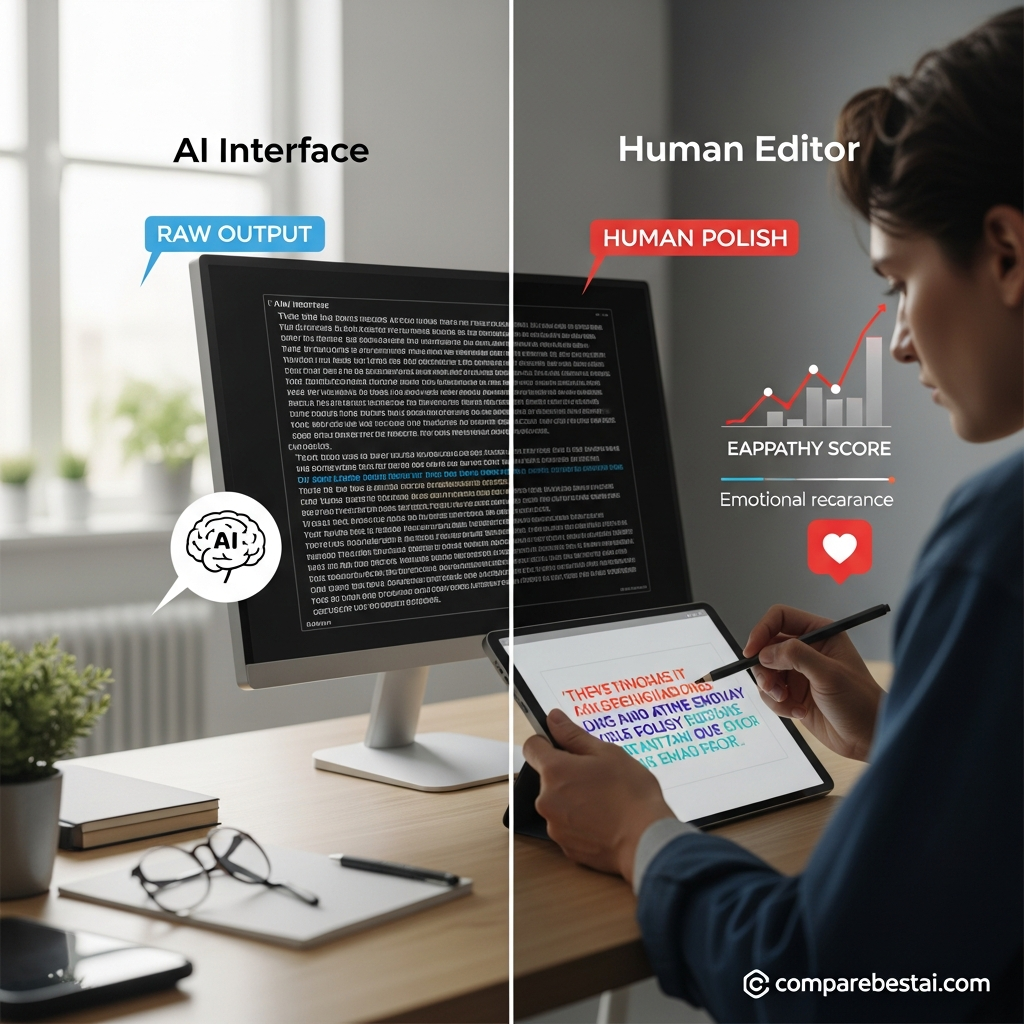

The digital landscape has shifted dramatically. In 2026, generative AI is no longer a novelty; it is the infrastructure upon which modern internet publishing is built. However, with the ubiquity of automated text generation comes a critical challenge: the erosion of trust. Readers are increasingly sophisticated, capable of spotting the sterile, repetitive cadence of machine-generated text from a mile away. For marketers and publishers, the goal is no longer just to produce content at scale, but to humanize AI content in a way that resonates emotionally and builds lasting authority.
Search engines have evolved alongside these technologies. The algorithms of today prioritize experience and genuine insight over sheer keyword density or syntactic perfection. To succeed in this competitive environment, brands must adopt a hybrid approach—leveraging the efficiency of advanced language models while strictly enforcing a layer of human empathy, nuance, and lived experience. This guide explores the advanced strategies required to transform robotic outputs into compelling, high-ranking narratives.
Elevating Authenticity Through Google E-E-A-T Standards
The foundational step in refining automated drafts lies in understanding what search engines actually value. By 2026, Google’s E-E-A-T (Experience, Expertise, Authoritativeness, and Trustworthiness) framework has become the primary filter for ranking content. While AI can simulate expertise and authority by aggregating vast datasets, it fundamentally lacks "Experience"—the lived reality of the writer.
To bridge this gap, content strategists must inject tangible proof of human involvement. This involves verifying facts against real-world scenarios and citing primary data sources that a language model might hallucinate or misinterpret. For deep dives into how search algorithms perceive value, resources like Google Search Central provide essential documentation on quality rater guidelines. Authenticity is not just about tone; it is about accuracy and the unique perspective that only a subject matter expert can provide.
Mastering Emotional Resonance in Automated Copy
One of the distinct markers of AI writing is its emotional flatness. Large Language Models (LLMs) tend to hedge their statements, using neutral transitions and passive voice to maintain a "safe" output. To truly connect with an audience, you must disrupt this pattern. Human communication is messy, variable, and often driven by pathos. Emotional resonance is the secret ingredient that turns a generic article into a persuasive asset.
Writers should focus on varying sentence structure to create a natural rhythm. Short, punchy sentences can create urgency, while longer, complex sentences can explore nuance. Furthermore, the inclusion of rhetorical questions, idioms, and cultural references helps break the algorithmic monotony. This is not merely about changing words; it is about infusing the text with intent and empathy that aligns with the user's underlying pain points.
Strategic Prompt Engineering for Distinctive Brand Voice
The quality of the output is inextricably linked to the quality of the input. In 2026, "prompt engineering" has evolved into "context engineering." Simply asking an AI to "write a blog post" results in generic drift. Instead, marketers must provide comprehensive style guides, tone maps, and specific constraints within the prompt to ensure the initial draft aligns closer to the human brand voice.
Advanced Contextual Layering
To maintain a consistent voice, provide the AI with examples of your brand’s best-performing content. Instruct the model to mimic specific stylistic traits, such as witty asides, professional skepticism, or enthusiastic storytelling. By constraining the AI's vocabulary and sentence structure options, you force the model to be more creative within your specific boundaries.
Iterative Refinement Loops
Treat the AI not as a writer, but as a junior researcher. The first output should never be the final product. Establish a workflow where the AI generates an outline or a rough draft, which is then heavily restructured by a human editor. This hybrid loop ensures that the structural logic is sound while the final polish remains distinctly human.
The Role of Personal Narrative in Modern SEO
Why should a reader trust your content over the millions of other AI-generated pages? The answer lies in personal narrative. AI cannot taste food, test software in a rainy commute, or feel the frustration of a failed marketing campaign. Integrating first-person anecdotes and specific case studies is the most effective method to differentiate your content.
When reviewing AI drafts, identify sections where a personal story can illustrate a point. Replace hypothetical examples ("Imagine a business owner...") with concrete realities ("When we worked with Client X in 2024..."). This not only boosts engagement but also signals to search engines that the content is rooted in genuine experience, satisfying the "Experience" component of E-E-A-T. For broader context on how technology intersects with human narrative, MIT Technology Review offers insightful analysis on the boundaries of machine capability.
Analyzing Top AI Text Converters vs. Human Editing
There is a growing market of tools designed to "rewrite" AI text to bypass detection algorithms. However, relying solely on these tools is a risky strategy. While they may scramble syntax to fool a detector, they often degrade readability and coherence. A comparison of approaches reveals that human editing remains superior for high-stakes content.
Automated Paraphrasing Tools
- Pros: Speed, scalability, and ability to quickly alter sentence structures.
- Cons: Often results in awkward phrasing, loss of original meaning, and a "choppy" reading experience.
Manual Editorial Review
- Pros: Preserves semantic integrity, ensures tonal consistency, and allows for the insertion of strategic internal links and conversion elements.
- Cons: Resource-intensive and slower than automated solutions.
For sustainable growth, a balanced approach is best. Use tools to assist with vocabulary variation, but rely on human editors for flow, logic, and persuasion.
Navigating Enterprise AI Ethics and Compliance
As organizations scale their content production, ethical considerations become paramount. Transparency is key to maintaining reader trust. In many jurisdictions, and according to emerging 2026 compliance standards, disclosing the use of AI in content creation is becoming best practice, if not a legal requirement.
Enterprises must establish clear governance regarding data privacy and copyright. Ensuring that the AI tools used do not infringe on intellectual property or propagate bias is the responsibility of the human oversight committee. Leading marketing platforms like HubSpot frequently discuss the intersection of automation and ethical marketing, emphasizing that trust is the currency of the future. Compliance is not just about avoiding fines; it is about protecting the brand reputation against the backlash of "fake" content.
Conclusion
The digital ecosystem of 2026 demands a sophisticated partnership between human creativity and machine efficiency. We cannot ignore the speed and scale that AI offers, nor can we sacrifice the nuance and empathy that human readers crave. The strategy is not to hide the use of technology, but to master it.
By prioritizing Google's E-E-A-T principles, injecting personal experience, and maintaining rigorous ethical standards, brands can create content that stands out in a sea of automated noise. Ultimately, the ability to **humanize AI content** is the defining skill of the modern marketer. It transforms information into insight and users into loyal advocates. As we move forward, remember that while AI can predict the next word, only a human can understand the weight of it.