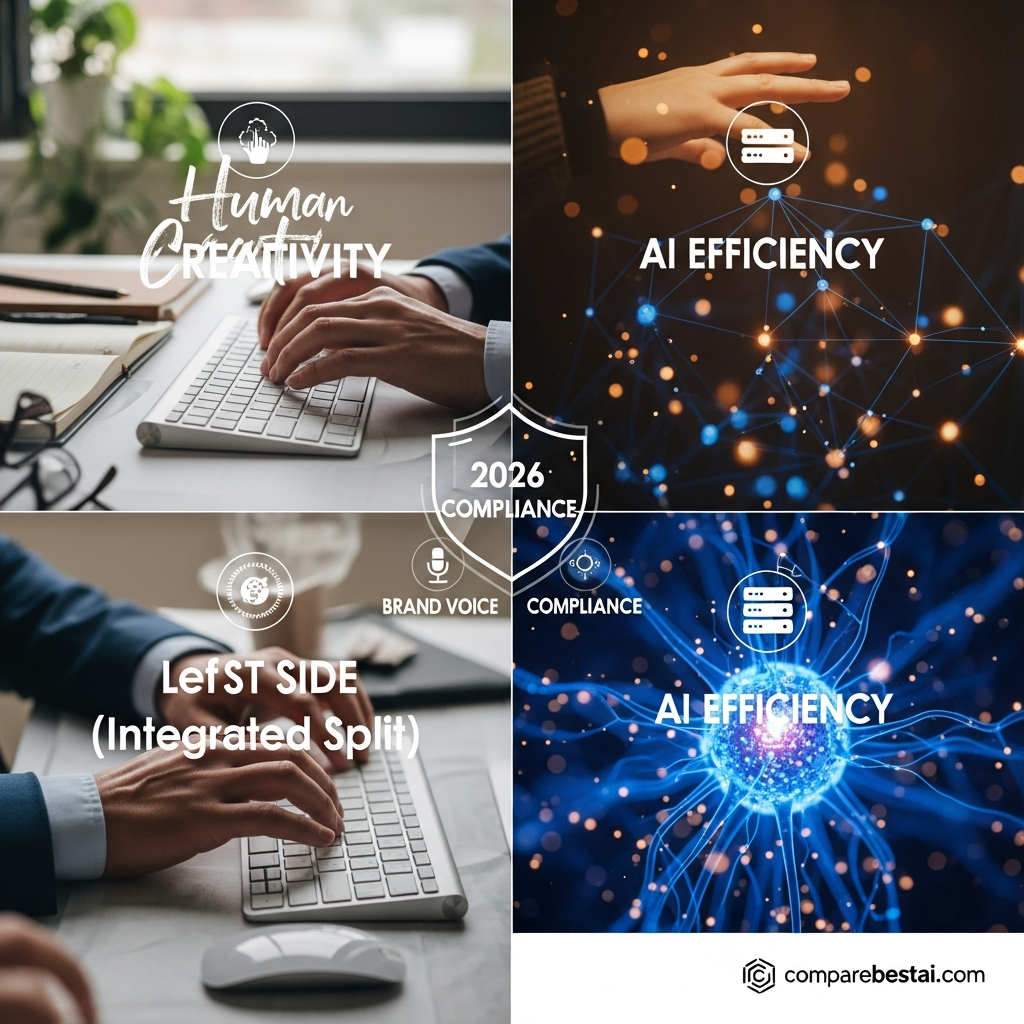

The digital ecosystem has shifted dramatically over the last few years. By 2026, the novelty of generative text has completely evaporated, replaced by a sophisticated readership that craves genuine connection. While algorithms have become exponentially more efficient, the "uncanny valley" of written text remains a significant hurdle for brands. To compete in this saturated market, marketing teams must learn to humanize AI content effectively, blending the speed of automation with the nuance of human empathy.
Search engines and users alike have developed a keen radar for synthetic fluff. The days of publishing raw, unedited outputs are long gone; today, success depends on strategic refinement and strict adherence to authenticity. This guide explores how to elevate your digital strategy by injecting personality into automated workflows while navigating the complex regulatory environment of the modern web.
Evolving Search Standards and User Trust Factors
The criteria for ranking high on search engine results pages (SERPs) have evolved to prioritize deep expertise and user satisfaction metrics over simple keyword density. Modern algorithms are now adept at identifying "slop"—low-value content generated en masse without editorial oversight. To maintain visibility, digital strategists must focus on Experience, Expertise, Authoritativeness, and Trustworthiness (E-E-A-T).
In 2026, search engines do not necessarily penalize AI usage itself, but they strictly punish the lack of value often associated with it. Content that fails to provide unique insights, original data, or a distinct point of view is rapidly de-indexed. For a deeper understanding of these quality thresholds, refer to Google Search Central documentation on helpful content systems.
The Role of Emotional Intelligence
User trust is built on emotional resonance. Standard language models, despite their advancements, often default to a neutral, academic, or overly enthusiastic tone that feels detached. Incorporating emotional intelligence involves understanding the user's pain points and responding with empathy rather than just facts.
Techniques to Eradicate "Bot-Speak" from Your Copy
One of the most common user queries today is "how to make AI sound human." The answer lies in disrupting the predictive patterns of language models. AI tools are designed to predict the most likely next word, resulting in a distinctively smooth but monotonous rhythm often called "flatline prose."
- Sentence Variance: Humans write with a chaotic mix of short, punchy fragments and long, winding explanations. Force your output to vary its cadence.
- Idioms and Colloquialisms: While AI can use idioms, it often uses them strictly by the book. Human editors should inject industry-specific slang or fresher metaphors that aren't clichés.
- Personal Anecdotes: AI cannot experience the world. Inserting first-person stories or case studies from your team's actual experience is the single fastest way to differentiate your copy.
Navigating Enterprise AI Compliance and Ethics
As we leverage more powerful tools, enterprise AI compliance has moved from a legal footer to a boardroom priority. In 2026, transparency laws in the EU and North America require clear disclosure when users interact with synthetic media. However, compliance goes beyond just labeling; it involves data privacy and the ethical sourcing of information.
Organizations must establish rigorous governance frameworks. This ensures that the data used to train or prompt internal models does not violate copyright laws or leak proprietary stakeholder information. According to recent reports from MIT Technology Review, companies that prioritize ethical transparency see a marked increase in brand loyalty compared to those that obscure their automation practices.
Watermarking and Attribution
Advanced digital watermarking allows brands to claim ownership of their hybrid content. This practice protects your intellectual property and signals to readers that, while tools were used, the insight belongs to a verified human entity.
Prompt Engineering for Authentic Brand Voice
The "garbage in, garbage out" adage remains true. To achieve an authentic brand voice, you must move beyond generic prompts. The most successful content teams in 2026 treat their AI models as junior staff members who need detailed style guides, not just topic assignments.
Instead of asking for a "blog post about marketing," a superior prompt strategy involves feeding the model examples of your brand's previous high-performing content. This technique, known as "few-shot prompting," drastically improves the stylistic alignment of the initial draft.
Comparing Workflows: Human-Led vs. Hybrid Models
Choosing the right production workflow is critical for balancing scale with quality. Below is a comparison of the two dominant content creation strategies employed by top agencies today.
The Human-Led Editorial Approach
In this model, AI is used strictly for research and outlining. The actual drafting is done 100% by human writers.
- Pros: Maximum authenticity, zero risk of hallucination, high emotional connection.
- Cons: Slower production time, higher cost per unit.
- Best For: Thought leadership, opinion pieces, and crisis communication.
The Hybrid "Editor-in-the-Loop" Approach
Here, AI generates the first draft based on a detailed brief, and a human editor heavily rewrites the output to inject voice and accuracy.
- Pros: Rapid scalability, consistent formatting, cost-effective for bulk content.
- Cons: Requires highly skilled editors to spot subtle errors and tonal inconsistencies.
- Best For: Product descriptions, technical documentation, and standard SEO listicles.
For more insights on balancing technology with creativity, HubSpot's Marketing Blog offers excellent resources on integrating tools into creative workflows without losing the human touch.
Future-Proofing Your Digital Strategy
Looking ahead, the integration of multimodal AI—systems that understand text, video, and audio simultaneously—will redefine content standards again. However, the core principle will remain unchanged: technology is an accelerator, not a replacement for strategy. The ability to discern where to apply automation is more valuable than the automation itself.
Smart marketers understand that ethical AI usage is a competitive advantage. By committing to quality and transparency, you insulate your brand against algorithmic volatility and build a resilient relationship with your audience.
Conclusion
The content landscape of 2026 demands a sophisticated approach that marries technological capability with human insight. As we have explored, the goal is not to hide the use of tools, but to elevate their output through rigorous editing, strong governance, and a commitment to storytelling. By taking the time to humanize AI content, you ensure that your message cuts through the noise of the automated web.
Ultimately, the brands that win will be those that use AI to free up human time for what humans do best: strategic thinking, creative dreaming, and genuine connection.