
The digital marketing landscape of 2026 is defined by velocity and personalization. With video content now accounting for over 85% of global internet traffic, businesses are under immense pressure to produce high-quality visual assets at scale. The days of booking studios, hiring actors, and spending weeks in post-production for simple updates are fading. In this environment, tools like Synthesia have transitioned from novelties to enterprise staples. But for organizations watching their bottom line, the core question remains: is Synthesia worth it when compared to traditional production or emerging competitors?
This analysis dives deep into the platform's capabilities, pricing models, and real-world utility to determine if this AI video generator is the right investment for your content strategy.
Evaluating the Quality of AI Avatars in 2026
When Synthesia first launched, the primary criticism was the "uncanny valley" effect—avatars that looked human but moved robotically. In 2026, the technology has matured significantly. The platform now utilizes advanced neural rendering that captures micro-expressions, making the difference between an AI avatar and a human presenter negligible on mobile screens and standard monitors.
For businesses asking how good is Synthesia AI really, the answer lies in the details. The lip-syncing technology has evolved to handle multiple languages with near-native modulation. This is crucial for global brands that need to localize content instantly without re-filming. However, while the visual fidelity is impressive, it is essential to understand that these tools are best used for instructional content, updates, and personalized sales outreach rather than emotional brand storytelling.
Synthesia Pros and Cons for Enterprise and SMBs
To determine if you should use Synthesia AI, it is vital to weigh the advantages against the limitations. The software excels in efficiency but may not suit every creative vision.
Key Advantages
- Scalability: You can generate hundreds of personalized videos in minutes using API integrations.
- Localization: Translate a single script into over 140 languages instantly, maintaining the same avatar's voice and tone.
- Cost Reduction: It eliminates the need for cameras, lighting, microphones, and actors.
- Consistency: Brand avatars ensure that training materials remain visually consistent over years of updates.
Notable Disadvantages
- Emotional Range: While improved, AI avatars still struggle with high-drama or deeply emotional delivery compared to professional actors.
- Creative Limits: You are generally confined to a "presenter" format; you cannot create dynamic action shots or complex cinematic scenes.
- Perception: Some audiences still prefer authentic human connection, specifically in B2C trust-building scenarios.
Analyzing the Cost Efficiency and ROI for Modern Businesses
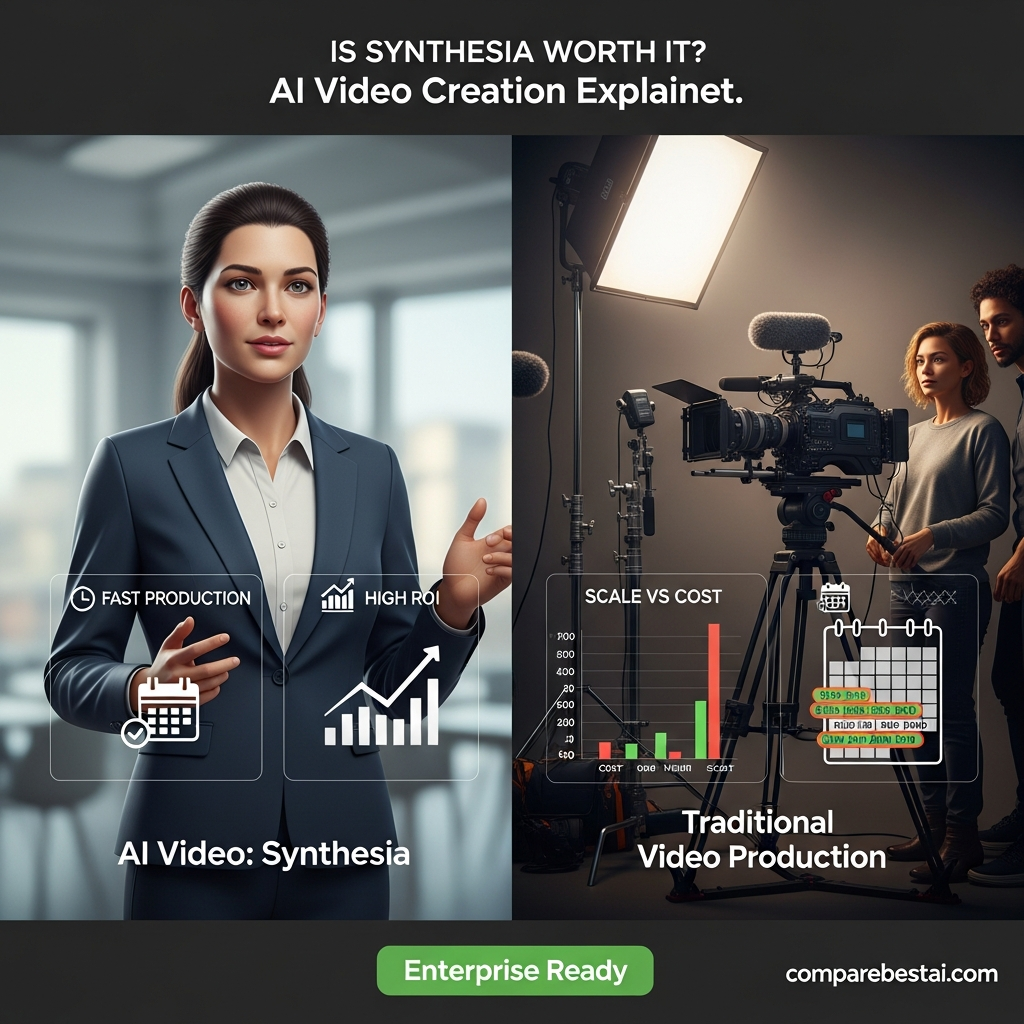
The discussion of Synthesia AI cost vs value is straightforward when you look at production budgets. A traditional corporate training video can cost anywhere from $1,000 to $5,000 per finished minute when factoring in crew, equipment, and editing time. In contrast, Synthesia AI subscription pricing USA models typically offer entry-level access for a fraction of that cost per month.
For a small business, is Synthesia worth it? If you produce at least four videos a month, the ROI is almost immediate. The platform allows solopreneurs and marketing teams to create an AI video tool without camera equipment, democratizing high-quality video production. For enterprises, the value shifts from pure cost savings to speed—being able to update compliance training videos across 50 regions in 24 hours is a capability traditional video cannot match.
For more on how AI is reshaping marketing budgets and strategies, you can read insights from the HubSpot Marketing Blog.
Synthesia AI Compared to Traditional Video and Competitors
The market for AI avatar video tools for business has become crowded. The most common comparison requested by users is Synthesia vs HeyGen which is better. While both platforms offer stellar lip-syncing and custom avatars, Synthesia has carved out a niche in the corporate and enterprise sector with robust security features, SOC 2 compliance, and collaborative workspaces.
Feature Breakdown: Synthesia vs. The Competition
- Synthesia: Best for L&D (Learning and Development), corporate communications, and large-scale localization. It offers the most rigorous security protocols.
- HeyGen/Competitors: Often favored for social media content creation and more casual, viral-style video formats.
- Traditional Video: Still superior for emotional brand films, documentaries, and testimonials where human authenticity is the product.
Understanding these distinctions helps clarify Synthesia AI alternatives comparison data. If your goal is highly secure, internal corporate communication, Synthesia often wins. If you need viral TikTok content, other tools might have an edge.
Top Use Cases: Where the Tech Shines
The Synthesia AI use cases that drive the highest value usually involve information density and frequent updates. It is not designed to replace Hollywood directors but to replace the PDF and the boring slide deck.
Synthesia AI for Training Videos and L&D
This is the platform's "killer app." Companies can turn text-based employee handbooks into engaging video series. When policies change, you simply edit the text script, and the video regenerates. This "evergreen" capability makes Synthesia AI worth it for enterprises looking to maintain up-to-date compliance without constant re-shoots.
Synthesia AI for Marketing Videos
While less effective for emotional TV commercials, the tool is incredible for product explainers, onboarding sequences, and personalized sales follow-ups. See Google Search Central for guidelines on how video content improves SEO visibility and dwell time on product pages.
Navigating Ethics and Content Authenticity
As we move deeper into 2026, the question "is Synthesia good for businesses" also encompasses ethics. With the rise of deepfakes, audiences are skeptical of synthetic media. Synthesia has taken a proactive stance by implementing strict content moderation and watermarking technologies, ensuring that the tool cannot be used for impersonation without consent.
Using Synthesia AI real user experience data, we see that transparency is key. Audiences are generally accepting of AI avatars for customer support and training, provided the context is clear. However, trying to pass an AI avatar off as a real human CEO in a crisis apology video remains a major reputational risk.
Final Verdict: Is Synthesia Worth the Investment?
So, is Synthesia worth it in the current digital ecosystem? For businesses that require scale, speed, and multilingual capabilities, the answer is a resounding yes. It transforms the bottleneck of video production into a streamlined workflow.
If you are looking for an AI video creation without filming solution that adheres to strict enterprise security standards and offers high-fidelity avatars, Synthesia remains the market leader. However, it should be viewed as a complement to your human content strategy, not a total replacement. By leveraging AI for the heavy lifting of instructional and localized content, you free up your human creative teams to focus on high-impact, emotional storytelling.
For further reading on the future of generative media, consult the MIT Technology Review AI section.