
By CompareBestAI Editorial Team
Quick Verdict
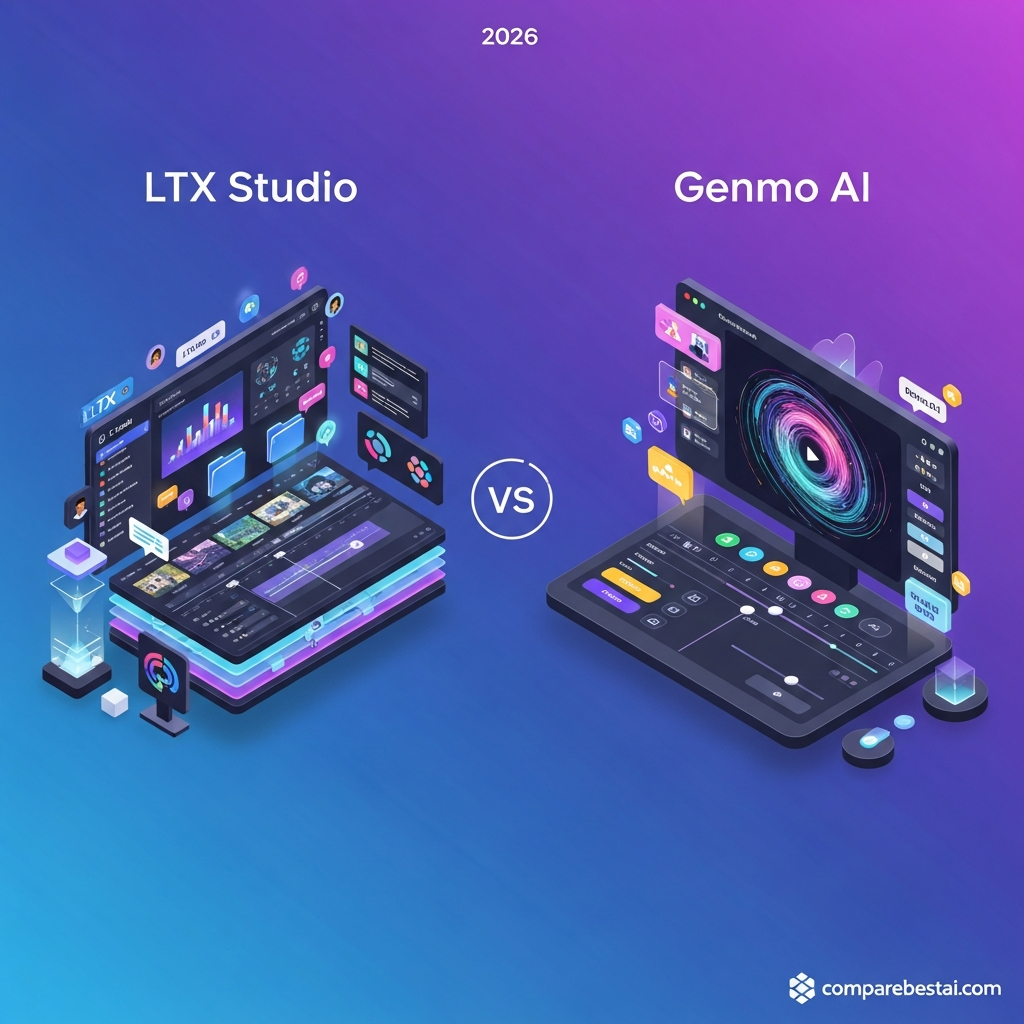
LTX Studio is the stronger choice for filmmakers, creative teams, agencies, and marketers who want an AI production workspace that goes beyond individual video generations. It combines AI storyboarding, scene planning, editing, consistent characters and assets, advanced camera controls, pitch decks, multiple generation models, and collaboration features.
Genmo AI is a better fit for creators and technical users who primarily want straightforward AI video generation at a lower monthly cost. Its Mochi model is also open source, making Genmo especially interesting for users who want to experiment with or customize an open text-to-video model.
For professional pre-production, storyboarding, multi-scene projects, and team workflows, LTX Studio wins.
For lower-cost video generation and open-source experimentation, Genmo AI offers better value.
Pricing checked: August 13, 2026. Prices, credits and available models can change, so verify current plan details before subscribing.
Download Your AI Video Buyer's Guide →
LTX Studio vs Genmo AI at a Glance| Category | LTX Studio | Genmo AI |
|---|---|---|
| Best for | Filmmaking, storyboarding, and production workflows | Focused AI video generation |
| Free option | Yes | Yes |
| Entry paid plan | Lite, $15/month | Lite, $10/month |
| Commercial-use entry | Standard, $35/month | Lite |
| Storyboarding | Yes | Not a core feature |
| Video generation | Yes | Yes |
| Video editing | Yes | More generation-focused |
| Team collaboration | Available on higher LTX tiers | Not emphasized in current self-serve plans |
| Open-source model | LTX models have separate open/developer options | Mochi 1 |
| Multiple third-party models in workspace | Yes | Not the main product model |
| Best advantage | End-to-end creative workflow | Focus and open-model flexibility |
What Is LTX Studio?
LTX Studio is an AI-powered production workspace developed by Lightricks for filmmakers, producers, advertising teams, and other visual creators.
It goes beyond basic prompt-to-video generation by combining script and concept development, AI storyboarding, reusable characters and Elements, scene generation, editing, camera controls, audio tools, pitch decks, and collaboration inside a broader production workflow.
LTX Studio also gives users access to several generation models depending on their subscription, including LTX models and selected third-party image and video models.
Its strongest use case is moving from an idea or script into a structured visual project rather than generating isolated clips one prompt at a time.
What Is Genmo AI?
Genmo is an AI research company focused on generative video and video world models.
Its Mochi 1 model turns text prompts into generated video and is available as an open-source model that developers and technical creators can run and customize independently.
Genmo also provides a hosted generation experience for users who want to create video without configuring the open-source model themselves.
Compared with LTX Studio, Genmo is more focused on generation itself and less focused on providing an entire filmmaking, pre-production, storyboarding, and client-review environment.
Answer: ltx studio vs genmo ai: LTX Studio edges out for professionals, agencies, and business users needing scalable AI-powered video automation, deep workflow features, and enterprise-grade collaboration. Its robust asset libraries, flexible scripting system, and integration ecosystem deliver maximum value for marketing and creative teams. Genmo AI is fun, fresh, and affordable for solo creators who want quick generative videos and simple sharing, but it lacks the workflow depth, control, and output quality needed for most business applications. LTX Studio is the best choice for users who rely on video as a core content channel; Genmo AI is better for casual, experimental, or entry-level projects.
Get the Full Comparison Guide →
Key Takeaways
- LTX Studio outperforms Genmo AI in professional video workflows, scalability, and integration (ltx studio vs genmo ai core difference).
- Genmo AI is a compelling option for hobbyists and creators who want fast, standout AI video art at low cost.
- LTX Studio offers advanced collaboration, deeper scene control, and reusable templates for agencies and business teams.
- For those comparing ltx studio alternatives, LTX Studio sits at the top for long-form video creation and workflow automation in 2026.
- Pricing and real value: LTX Studio justifies its higher cost with business-centric tooling and support, while Genmo AI stays accessible for personal projects.
Unlock More Features on LTX Studio →
Email me the full LTX Studio buyers guide
| Tool | Pricing | Best For | Rating | Winner |
|---|---|---|---|---|
| LTX Studio | Starts $39/mo Team & enterprise plans |
Agencies, marketers, long-form branded video | Strong | 🏆 Winner |
| Genmo AI | Free plan available Pro from $20/mo |
Casual creators, quick video art, social sharing | Average |
AI Video Tools Overview: LTX Studio and Genmo AI in 2026
LTX Studio and Genmo AI are both leading AI-powered video generation platforms in 2026. Each one helps users generate eye-catching videos using artificial intelligence, but their audiences, core features, and use cases are different. LTX Studio is a comprehensive video production suite built for efficiency, scale, and business impact. Genmo AI, on the other hand, is optimized for creative expression and personal projects. As companies move to AI-first video marketing and automation, understanding the strengths and gaps in the ltx studio vs genmo ai comparison is crucial.
At its core, LTX Studio is designed for professional creators and marketing teams that need repeatable branded video workflows. It offers multi-user collaboration, asset management, brand-safe templates, and support for long-form content, making it an ideal choice for agencies, enterprises, and advanced content teams. LTX Studio incorporates advanced AI features for script writing, video scene stitching, smart audio sync, and distribution integrations. This means teams can move from concept to published video up to 5x faster than manual workflows, while maintaining control and compliance.
Genmo AI focuses on giving individuals, social creators, and small teams the power to experiment with AI video. Its interface is built for accessibility - anyone can type a prompt, select a style, and generate a video in seconds. Genmo AI shines in the realm of quick, visually playful, and artistic video. Output lengths are typically shorter, with less control over scene transitions and branding. However, the tool continues to gain fans for its imaginative visuals, low barrier to entry, and fun community features for sharing AI-generated creativity. For ltx studio vs genmo ai, the distinction comes down to scale, depth, and professional polish.
Recently, AI-driven video creation has exploded in popularity. According to Gartner, over 70% of marketing teams globally are expected to use generative video tools by 2027. The right platform is critical for maintaining an edge. Those comparing ltx studio alternatives will notice a trend: standalone prompt-based tools like Genmo AI offer creative bursts but struggle with longer or brand-heavy content. Studio-grade suites such as LTX Studio close that gap by combining creative AI with business process architecture, ensuring videos are not only beautiful but also consistent, compliant, and scalable.

LTX Studio and Genmo AI have changed how creative professionals approach their workflows in 2026. Both lead the charge, but for anyone running campaigns, launching products, or looking to build a video-driven brand, the former delivers a level of control and consistency that's hard to beat.
LTX Studio vs Genmo AI Pricing
The pricing structures are significantly different.
LTX Studio Pricing| Plan | Monthly Price | Included Credits | Commercial Use |
|---|---|---|---|
| Free | $0 | 800 one-time credits | No |
| Lite | $15/month | 8,000/month | No |
| Standard | $35/month | 28,000/month | Yes |
| Pro | $125/month | 110,000/month | Yes |
| Enterprise | Custom | Custom | Yes |
Annual billing currently reduces the effective monthly cost of Lite, Standard and Pro.
The Free and Lite tiers are intended for personal projects. Users creating videos for business, marketing, clients, sponsorships, or other commercial purposes should evaluate Standard or higher.
Genmo AI Pricing
| Plan | Monthly Price | Credits | Commercial Use |
|---|---|---|---|
| Free | $0 | 250 lifetime credits | Limited |
| Lite | $10/month | 1,200/month | Yes |
| Standard | $30/month | 5,000/month | Yes |
The Free plan includes a Genmo watermark.
Lite removes the watermark, adds commercial usage rights and provides higher queue priority.
Standard increases the monthly credit allowance and provides the highest queue priority plus early model access.
Genmo currently advertises a discount for yearly billing.
Which Is Cheaper?
Genmo has the cheaper paid entry point.
However, comparing only the monthly subscription price can be misleading because LTX Studio includes a much broader set of production, storyboarding, editing and workflow capabilities.
Choose based on the workflow you need rather than price alone.
Features Compared
Storyboarding and Pre-Production
Winner: LTX Studio
LTX Studio can turn a script or creative brief into scenes, shots and visual storyboards.
Users can refine individual frames, manage reusable characters and objects, create animatics, collaborate on the storyboard and export pitch materials.
This makes LTX particularly useful for filmmakers, producers, agencies and teams that need to align creatively before final production.
Genmo is primarily focused on video generation rather than structured pre-production.
AI Video Generation
Winner: Depends on the workflow
Both products generate video with AI.
LTX Studio provides its own models alongside selected third-party models inside a larger production workspace.
Genmo focuses more directly on video-generation research and its Mochi model ecosystem.
Choose LTX if video generation needs to live inside a larger storyboard and editing process.
Choose Genmo if your priority is direct generation and experimentation.
Open-Source Flexibility
Winner: Genmo AI
Mochi 1 is available as an open-source text-to-video model.
Technical users can run and customize it outside Genmo's hosted interface, including through supported open-source workflows.
That makes Genmo particularly interesting for developers, researchers and creators who value model-level flexibility.
Editing and Production Workflow
Winner: LTX Studio
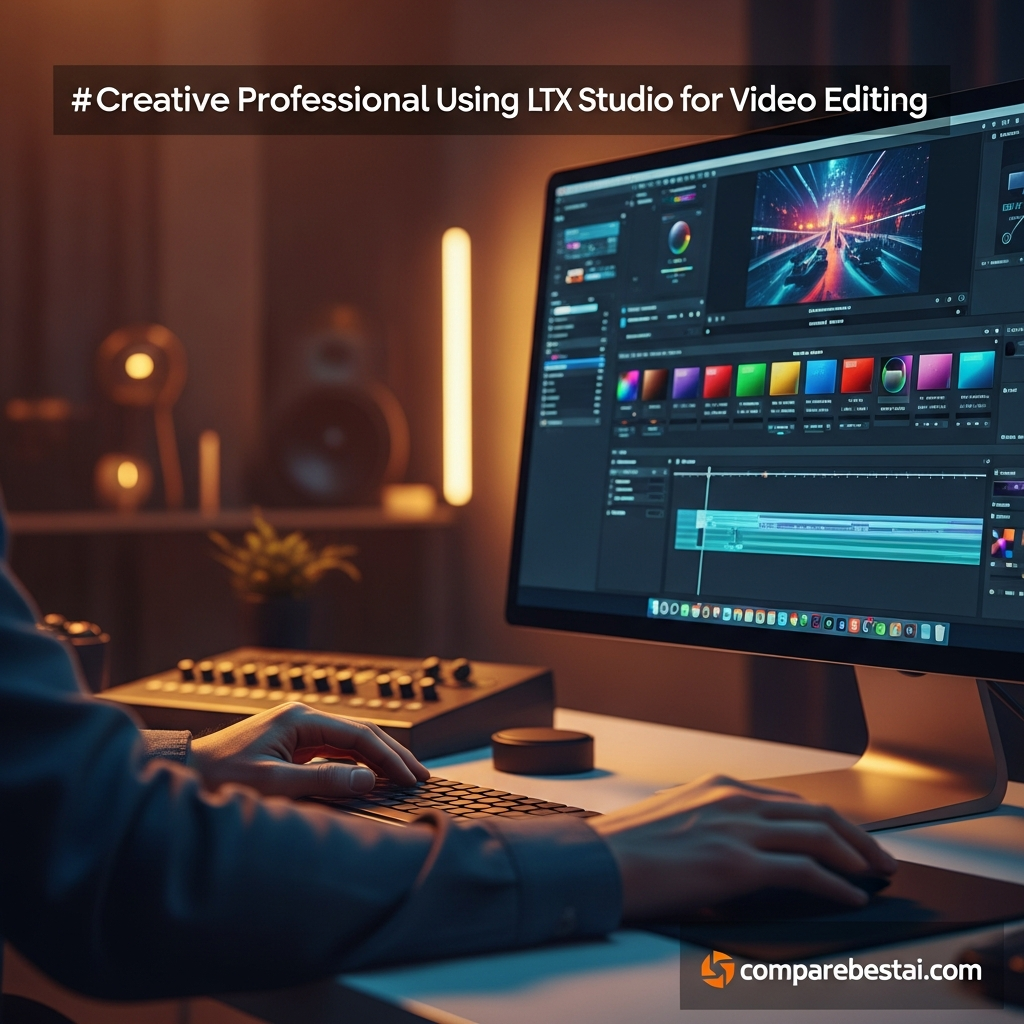
LTX Studio includes editing tools, video-to-video control, camera controls, audio-to-video capabilities, pitch decks and structured project workflows.
This makes it closer to an AI filmmaking environment than a standalone video generator.
Collaboration
Winner: LTX Studio
LTX Pro currently includes collaboration for up to three collaborators per project.
Enterprise expands this with organization-level controls, unlimited collaborators, SSO, centralized brand management and additional administration capabilities.
Users who need structured team production should therefore favor LTX Studio.
Commercial Use
Winner: Depends on budget
Genmo provides commercial usage on its Lite paid plan.
LTX Studio requires Standard or above for commercial use.
That gives Genmo a lower-cost entry point for freelancers and commercial creators who mainly need generation rather than the broader LTX production suite.
LTX Studio Pros and Cons
Pros
- AI storyboarding and pre-visualization
- Script-to-storyboard workflow
- Editing and video generation in one environment
- Reusable Elements for visual consistency
- Advanced camera controls
- Audio-to-video generation
- Multiple AI generation models
- Pitch deck generation
- Commercial-use options
- Collaboration on higher plans
- Enterprise SSO and organization controls
Cons
- Commercial use begins at Standard rather than Lite
- More expensive than Genmo for basic generation
- Credit consumption varies by generation task and model
- Broader interface can involve more learning than a simple prompt-based generator
- Some advanced collaboration capabilities require higher-priced plans
Genmo AI Pros and Cons
Pros
- Lower-cost paid entry point
- Free option for testing
- Commercial use on Lite and Standard
- Open-source Mochi video model
- Straightforward text-to-video focus
- Higher-priority queues on paid plans
- Useful for experimentation and model-focused workflows
Cons
- Less comprehensive than LTX Studio for pre-production
- No equivalent full storyboard-to-pitch workflow
- Credit limits restrict generation volume
- Free output includes a watermark
- Fewer built-in production-management capabilities than LTX Studio
Who Should Choose LTX Studio?
Choose LTX Studio if you:
- Develop films, ads or narrative video projects
- Want to turn scripts into storyboards
- Need consistent characters and assets across scenes
- Need pre-visualization before production
- Work with collaborators or clients
- Want several AI models inside one production workflow
- Need editing and generation together
- Create commercial content regularly
Who Should Choose Genmo AI?
Choose Genmo if you:
- Primarily need text-to-video generation
- Want a lower-cost paid option
- Want commercial rights without moving to a $35 plan
- Want access to an open-source video model
- Enjoy technical experimentation
- Do not need a full filmmaking or storyboard workflow
Email Me LTX Studio Pricing & Use Case Guide
LTX Studio vs Genmo AI FAQ
Which is better, LTX Studio or Genmo AI?
LTX Studio is better for users who need storyboarding, pre-production, editing, multi-scene creative control and collaborative production workflows.
Genmo is better suited to users focused primarily on video generation, lower-cost commercial access, or experimentation with the open-source Mochi model.
Which tool is cheaper?
Genmo currently has the cheaper paid entry point, with Lite starting at $10 per month.
LTX Studio Lite costs $15 per month, but commercial use on LTX begins with Standard at $35 per month.
Can I use LTX Studio commercially?
Yes, but commercial usage begins with LTX Studio's Standard plan.
Free and Lite are intended for personal use.
Can I use Genmo AI commercially?
Genmo currently includes commercial usage rights with its Lite and Standard paid plans.
Does LTX Studio support collaboration?
Yes. LTX Studio Pro currently supports up to three collaborators per project, while Enterprise provides broader organization-level collaboration and administration.
Is Genmo open source?
Genmo's Mochi 1 text-to-video model is open source and can be downloaded, run and customized separately from the hosted Genmo experience.
Which is better for filmmakers?
LTX Studio is generally the better choice for filmmakers because its workflow includes scripts, storyboards, scene planning, consistent Elements, camera controls, editing, animatics and pitch materials.
Which is better for developers and AI researchers?
Genmo is particularly interesting for technical users because Mochi 1 is available as an open-source model.
Developers should still compare it with LTX's separate developer and open-model offerings according to their infrastructure and generation requirements.
Verified Facts
Information checked: August 13, 2026
LTX Studio currently offers Free, Lite, Standard, Pro and Enterprise plans.
LTX Studio Lite costs $15 per month, Standard costs $35 and Pro costs $125 with monthly billing.
Free includes 800 one-time credits, Lite includes 8,000 credits per month, Standard includes 28,000 and Pro includes 110,000.
Commercial use begins with LTX Studio Standard.
LTX Studio Pro supports three collaborators per project.
LTX Studio Enterprise includes custom credit volumes, centralized brand controls, unlimited collaborators, SSO, organization-level onboarding and compliance capabilities.
Genmo currently offers Free, Lite and Standard self-serve tiers.
Genmo Lite provides 1,200 monthly credits and Standard provides 5,000.
Paid Genmo plans remove the watermark and permit commercial usage.
Genmo's Mochi 1 is an open-source text-to-video model.
Sources: Current official LTX Studio and Genmo product and pricing documentation. Information checked August 13, 2026.
Final Verdict: LTX Studio vs Genmo AI
There is no universal winner between LTX Studio and Genmo AI because they approach AI video creation differently.
For filmmakers, agencies, producers and creative teams, LTX Studio is the stronger overall production platform. Its value comes from combining video generation with storyboarding, pre-production, editing, consistent visual Elements and collaborative workflows.
For creators who primarily need AI video generation at a lower price, Genmo offers better entry-level value. Its open-source Mochi model also gives technical users a level of model flexibility that is especially useful for experimentation and development.
Choose LTX Studio if you need an AI production workflow.
Choose Genmo if you mainly need generation or open-model flexibility.
Compare LTX Studio and Genmo based on the workflow you actually need, not simply the lowest subscription price.
Download the Free Buyers Guide →
Found this guide useful? Share it with your team.