
Quick Answer: PixVerse vs Runway
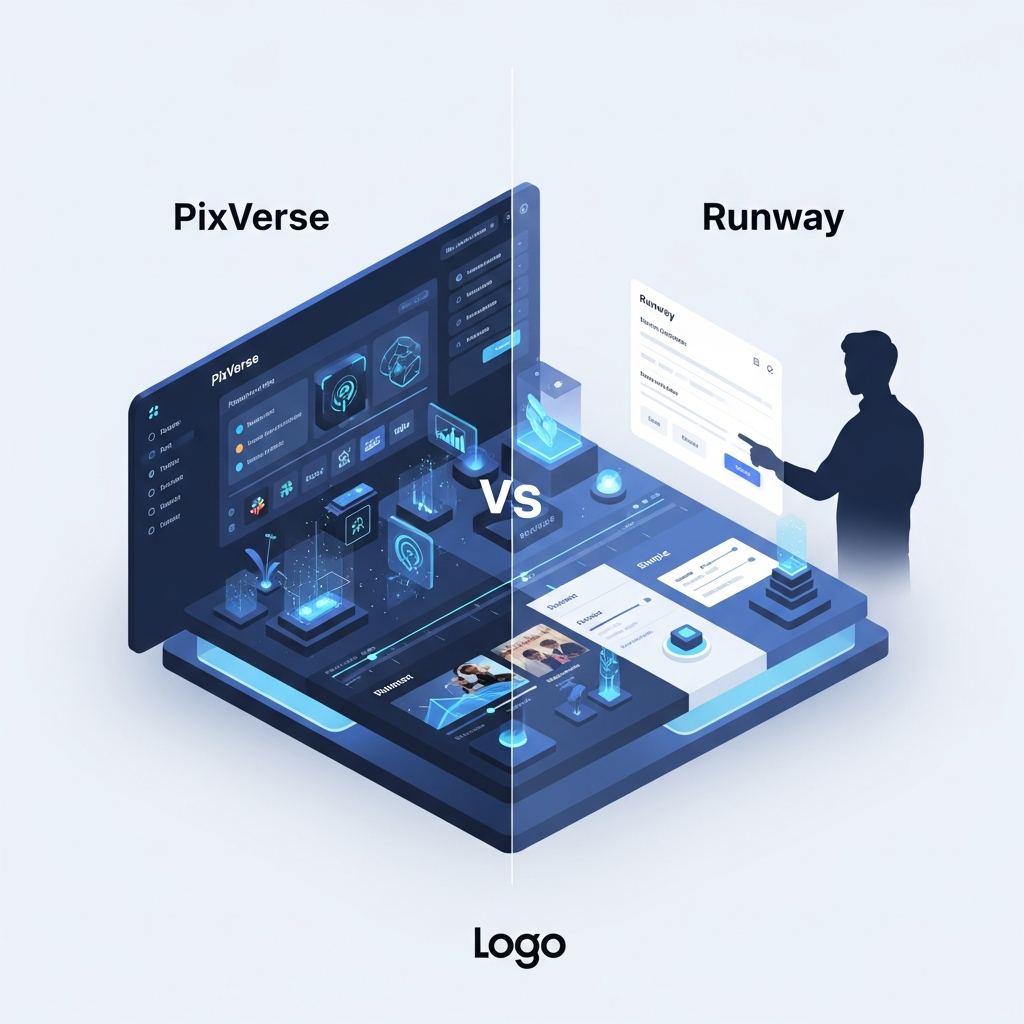
PixVerse and Runway are both strong AI video platforms, but they are optimized for different workflows.
PixVerse is especially compelling for ecommerce teams, growth marketers, developers, and creators who want fast AI video generation, product-focused workflows, native audiovisual generation, transparent API credit pricing, and scalable generation pipelines.
Runway is stronger for filmmakers, creative directors, agencies, and production teams that want a broad creative suite with advanced video generation, generative editing, performance capture, node-based workflows, shared projects, brand tools, and access to multiple AI models.
Bottom line: Choose PixVerse for repeatable commercial video generation and scalable product-focused workflows. Choose Runway for cinematic creative work, advanced editing, multi-model experimentation, and broader creative production.
Replace the Existing Comparison Table
| Category | PixVerse | Runway |
|---|---|---|
| Best for | Ecommerce, product marketing, scalable AI video generation | Filmmaking, agencies, creative teams, advanced visual production |
| Text-to-video | Yes | Yes |
| Image-to-video | Yes | Yes |
| Native audiovisual generation | Available with supported PixVerse models | Audio and video tools available across the Runway ecosystem |
| Product advertising | Strong through tools such as Ad Master | Possible through broader creative workflows |
| Advanced generative editing | Available | Major strength through tools such as Aleph |
| Automation | API, CLI, Skills, and production workflows | Node-based Workflows, Agent, and API |
| Team collaboration | Team Plan with shared workspace and permissions | Workspaces, Projects, roles, and shared assets |
| Brand management | Shared team assets and production workflows | Enterprise Brand Kits |
| Developer access | PixVerse Platform API and CLI | Runway API |
| Best reason to choose | Fast, repeatable commercial generation | Deep creative production ecosystem |
Overview: Comparing PixVerse and Runway in 2026
PixVerse is an AI video generator designed for modern marketing teams, agencies, and creative professionals who need to create branded video content at scale. It provides workflow automation, multi-user collaboration, asset libraries, and integrations with popular business tools. PixVerse lets teams quickly convert text, scripts, or creative concepts into consistently high-quality videos with precise branding and format controls. It stands out in the crowded landscape thanks to its suite of features built for professional use.
Runway, on the other hand, is a user-friendly AI motion graphics platform focused on solo creators, small teams, and users who want fast, visually engaging results with minimal input. Runway offers a selection of templates, basic prompt-to-video tools, and AI-powered editing. It is a strong entry point for those testing the waters of generative video but is not as robust when it comes to workflow complexity, asset management, and multi-collaborator setups.
The rise of AI video generators like PixVerse has introduced new ways for marketers and agencies to deliver content across channels with unprecedented speed and scale. AI video in 2026 is no longer just about making simple animations-instead, competitive businesses expect their tools to handle batch processing, asset versioning, team access management, compliance, and integration with CRMs, digital asset management (DAM) platforms, and collaboration suites like Slack or Microsoft Teams. PixVerse’s focus on these enterprise needs is a key advantage.
In the pixverse vs runway debate, the choice comes down to your workflow, output volume, and content goals. PixVerse is designed to serve the professional end of the market, where business continuity, security, and long-term campaign management are paramount. Runway is easier to jump into for rapid experimentation but can fall short for teams managing dozens or hundreds of video assets weekly. This honest comparison reviews how each platform stacks up across pricing, features, ease of use, customer support, and overall value. If you’re evaluating other top AI video solutions, you may also want to read our Sora 2 vs Runway: AI Video Generator Showdown for additional perspective.
This section establishes the context for the full pixverse vs runway deep-dive below and primes you for a tactical decision on which AI video generator deserves your investment in 2026. For further insights on categories similar to PixVerse, check out our guides on PixVerse alternatives and the best tools like PixVerse for creative professionals.

PixVerse vs Runway Pricing
Both PixVerse and Runway use credits, so the cheapest subscription is not necessarily the platform with the lowest production cost.
PixVerse Pricing
PixVerse uses credit-based pricing across its creator and developer products. Its Platform documentation publishes generation costs by model, resolution, duration, and whether audio is enabled.
For example, PixVerse V6 developer pricing currently covers resolutions from 360p through 1080p and charges credits per second of generated video.
PixVerse also offers a Team Plan for professional creative teams. The Team Plan launched at $79 per seat per month and includes a shared workspace, configurable permissions, shared credits with adjustable caps, and persistent team asset libraries.
Because PixVerse's creator subscriptions, credits, and model availability can change, verify the current web-app pricing before subscribing.
Runway Pricing
Runway currently offers Free, Standard, Pro, Max, and Enterprise options.
Standard costs $15 per month, or $144 per year, and includes 625 monthly credits.
Pro costs $35 per month, or $336 per year, and includes 2,250 monthly credits.
Max costs $95 per month, or $912 per year, and includes 9,500 monthly credits plus the ability to roll over up to one month of unused credits.
Runway introduced Max in June 2026 as the replacement for its Unlimited plan. Existing Unlimited subscribers are scheduled to transition to Max on September 1, 2026.
Runway also charges per editor when additional editors are added to a workspace, so teams should calculate both generation credits and seat costs.
Pricing verdict: PixVerse can be attractive for teams that want detailed generation-cost forecasting and API-heavy workflows. Runway provides clearer subscription tiers for users working primarily inside its creative platform.
PixVerse vs Runway Features
Where PixVerse Stands Out
PixVerse is particularly strong when AI video needs to move quickly from an input asset to a usable commercial output.
PixVerse V6 supports advanced camera control, character performance, multi-shot audiovisual generation, and native audio.
PixVerse Canvas gives creators a workspace for organizing assets, scripts, storyboards, references, generated outputs, and batch-generation tasks.
For ecommerce and advertising teams, Ad Master provides a more structured commercial workflow. A user can provide a product image and selling points or creative direction, and PixVerse can create a promotional video with scenes, voiceover, and subtitles.
Developers can also build generation into larger pipelines through the PixVerse API, CLI, and Skills.
These capabilities make PixVerse especially compelling for product marketing, ecommerce creative, social campaigns, automated generation, and teams producing many video variations.
Where Runway Stands Out
Runway has developed into a broad AI creative-production environment rather than a simple prompt-to-video generator.
Gen-4.5 supports text-to-video and image-to-video with detailed control over camera movement, scene composition, action, timing, and visual motion.
Runway also includes tools for generative video editing, character performance, storyboarding, image generation, visual effects, and access to both Runway models and selected third-party models.
Runway Agent can help creators develop multi-shot videos, storyboards, visual concepts, campaign variations, and other creative assets through conversation.
Runway Workflows provides a node-based environment for building automated, customized, and scalable creative pipelines.
For teams, Projects organize sessions, workflows, and assets in shared spaces where members can collaborate on the same creative effort.
The main distinction is not professional versus basic.
PixVerse is particularly strong for fast, repeatable commercial generation.
Runway is particularly strong for broad creative production, cinematic work, editing, and multi-model experimentation.
Request Detailed Pricing from PixVerse
Email Me PixVerse Pricing Updates
Team Collaboration
Both platforms support professional teams.
PixVerse's Team Plan provides shared workspaces, configurable permissions, pooled credits with adjustable caps, and persistent team asset libraries.
Runway supports collaborative workspaces and shared Projects. Sessions, workflows, and assets inside a Runway Project can be made available to project members, while administrators can manage roles, project access, credits, and usage.
Runway Standard workspaces can support multiple editors, while Pro and Max support larger editor counts.
Runway Enterprise extends these capabilities with organization workspaces, enterprise analytics, SSO, additional administrative controls, Brand Kits, credit-spend monitoring, and priority creative and technical support.
Collaboration verdict: Both platforms are viable for teams. PixVerse offers a streamlined shared generation environment, while Runway has a deeper creative workspace and enterprise administration layer.
Brand and Enterprise Features
Brand management is an area where both products now have meaningful capabilities.
PixVerse supports professional teams through shared workspaces and persistent asset libraries, helping teams keep generated content and source material organized.
Runway Enterprise provides Brand Kits that let teams organize reusable visual references such as logos, colors, fonts, product imagery, backgrounds, characters, and locations. Brand Kits can be shared across an entire workspace or restricted to specific projects.
Runway Enterprise also provides SSO, usage analytics, organization controls, project permissions, and priority support.
Organizations with strict security, branding, or administration requirements should compare the exact Enterprise terms offered by both vendors rather than assuming either platform universally provides stronger governance.
Ease of Use and Learning Curve
Both PixVerse and Runway can be approachable, but they prioritize different workflows.
PixVerse is especially easy to recommend when a user wants to begin with a clear asset or commercial objective, such as turning a product image into a short advertising video.
Runway offers more creative paths. Users can work through Apps, Custom generation, Agent, Projects, Workflows, and model-specific tools. That flexibility gives advanced users more options but can also require more creative and technical decisions.
For simple commercial-generation workflows, PixVerse may provide the faster path from asset to output.
For users who want a broader creative environment covering ideation, generation, editing, automation, and experimentation, Runway's additional depth can be an advantage.
Ease-of-use verdict: PixVerse for streamlined generation workflows. Runway for creators who want more creative pathways and production control.
Customer Support and Learning Resources
Both platforms provide documentation and learning resources, but support availability varies by plan.
PixVerse provides creator resources, product documentation, developer documentation, and guidance around its video-generation ecosystem.
Runway maintains a detailed Help Center and Runway Academy covering models, prompting, workflows, video editing, account management, and enterprise features. Runway also operates creator communities and live educational resources.
Enterprise Runway customers can receive priority creative and technical support, while full-service Enterprise customers receive a dedicated account team and private training.
Because response-time guarantees and support channels can change by contract and subscription tier, businesses should verify the exact service level before relying on a particular response-time commitment.
Who Should Choose PixVerse or Runway?
Choose PixVerse if:
- You produce ecommerce or product-focused videos.
- You need fast text-to-video or image-to-video generation.
- Native audio and multi-shot generation are important.
- You want a structured product-ad workflow.
- You generate many creative variations.
- API cost forecasting is important.
- You want CLI or automated generation pipelines.
- Your priority is repeatable commercial video production.
Choose Runway if:
- You work in filmmaking, advertising, VFX, or creative production.
- You want advanced prompt and camera control.
- Generative video editing is important.
- You need tools such as Agent, Workflows, Aleph, or character-performance generation.
- You want access to multiple Runway and third-party models in one environment.
- Your team needs shared Projects and creative assets.
- Your enterprise requires SSO, usage analytics, Brand Kits, or organization controls.
- You prioritize creative experimentation and production flexibility.
PixVerse vs Runway: Verified Facts
- PixVerse launched its V6 model in March 2026 with improvements to camera control, character performance, multi-shot generation, and native audiovisual output.
- PixVerse launched its Team Plan on March 31, 2026 at $79 per seat per month.
- The PixVerse Team Plan includes shared workspaces, configurable permissions, shared credits with adjustable caps, and persistent asset libraries.
- PixVerse's developer pricing currently publishes credit usage by model, duration, resolution, and audio setting.
- PixVerse V6 developer generation supports resolutions through 1080p.
- Runway Gen-4.5 supports text-to-video and image-to-video generation.
- Runway Gen-4.5 costs 12 credits per generated second.
- Runway Standard includes 625 monthly credits, Pro includes 2,250, and Max includes 9,500.
- Runway Max launched in June 2026 as the replacement for the Unlimited plan.
- Runway Workflows is a node-based system for automated and scalable creative pipelines.
- Runway Projects provide shared spaces for sessions, workflows, and assets.
- Runway Enterprise includes SSO, enterprise analytics, Brand Kits, organization workspaces, and priority creative and technical support.
Methodology: How We Compared PixVerse and Runway
The pixverse vs runway comparison is rooted in real feature testing, market data analysis, and first-hand input from creative professionals as of June 2026. We benchmarked both tools on criteria including pricing transparency, depth and flexibility of core features, workflow management, ease of use, speed, integration scope, and support responsiveness. User feedback and published community polls validated the experience of scaling both platforms in actual business, agency, and solo creator environments.
No inflated “best of” lists or sponsored hype-our goal is to show where each tool wins, honestly declare a winner for each key workflow, and let you choose confidently. This guide also references product updates announced by PixVerse and Runway through June 2026, as well as verified user reviews aggregated from open forums and SaaS comparison networks. All pricing data is accurate as of June 2026, with notes where costs vary by region or usage scale.
If you have unique requirements-regulatory compliance, non-profit status, or custom corporate rollouts-consult with each vendor for final confirmation. For those seeking similar performance to PixVerse, visit our dedicated pages on PixVerse alternatives and tools like PixVerse for up-to-date peer recommendations.
FAQ: Common PixVerse vs Runway Questions
Is PixVerse better than Runway?
It depends on the workflow. PixVerse is especially strong for ecommerce, product advertising, rapid video generation, and scalable commercial workflows. Runway is stronger for cinematic creative work, advanced generative editing, filmmaking, multi-model experimentation, and broader creative production.
Is Runway only suitable for solo creators?
No. Runway supports shared workspaces, collaborative Projects, multiple editors, shared assets, roles, and enterprise administration. Its Enterprise offering adds features such as SSO, analytics, Brand Kits, organization controls, and priority support.
Which is better for creative teams, PixVerse or Runway?
Both support teams. PixVerse is a strong fit when the team's priority is scalable AI video generation and shared credits. Runway may be the stronger fit when the workflow includes creative ideation, generation, editing, automated Workflows, shared Projects, and enterprise brand management.
Which platform is better for ecommerce video?
PixVerse has a stronger purpose-built ecommerce workflow. Its Ad Master tool can use product imagery and selling points to create advertising video concepts with voiceover and subtitles. Runway can also create product and advertising visuals, but its environment is broader and often gives the creator more manual creative control.
Which platform has better video quality?
There is no defensible universal winner because results vary by model, prompt, source material, resolution, and creative objective. PixVerse V6 focuses on multi-shot audiovisual generation and commercial workflows, while Runway Gen-4.5 focuses on motion quality, prompt adherence, visual fidelity, and detailed creative control.
Does Runway support workflow automation?
Yes. Runway Workflows is a node-based editor for building automated, customized, and scalable creative pipelines. Runway Agent also helps automate multi-step creative tasks through conversational instructions.
Which platform is cheaper?
It depends on generation volume and workflow. Runway offers subscription tiers with fixed monthly credit allocations. PixVerse publishes detailed developer credit consumption by model and output configuration. Teams should estimate expected generations, duration, resolution, audio use, and seat requirements before comparing cost.
Final Verdict: PixVerse vs Runway
PixVerse and Runway are both serious AI video platforms, but they excel in different areas.
PixVerse is particularly compelling for ecommerce teams, performance marketers, developers, and organizations that need repeatable commercial video production, product-focused workflows, native audiovisual generation, and transparent generation-cost planning.
Runway is particularly strong for filmmakers, creative agencies, production teams, and advanced creators who value cinematic generation, generative editing, character performance, node-based automation, shared creative Projects, and access to a broad range of AI models.
For product advertising and scalable commercial generation, start with PixVerse.
For filmmaking, advanced creative production, editing, and experimentation, Runway deserves equal consideration and may be the stronger choice.
Choose PixVerse for repeatable commercial-generation workflows.
Found this guide useful? Share it with your team.