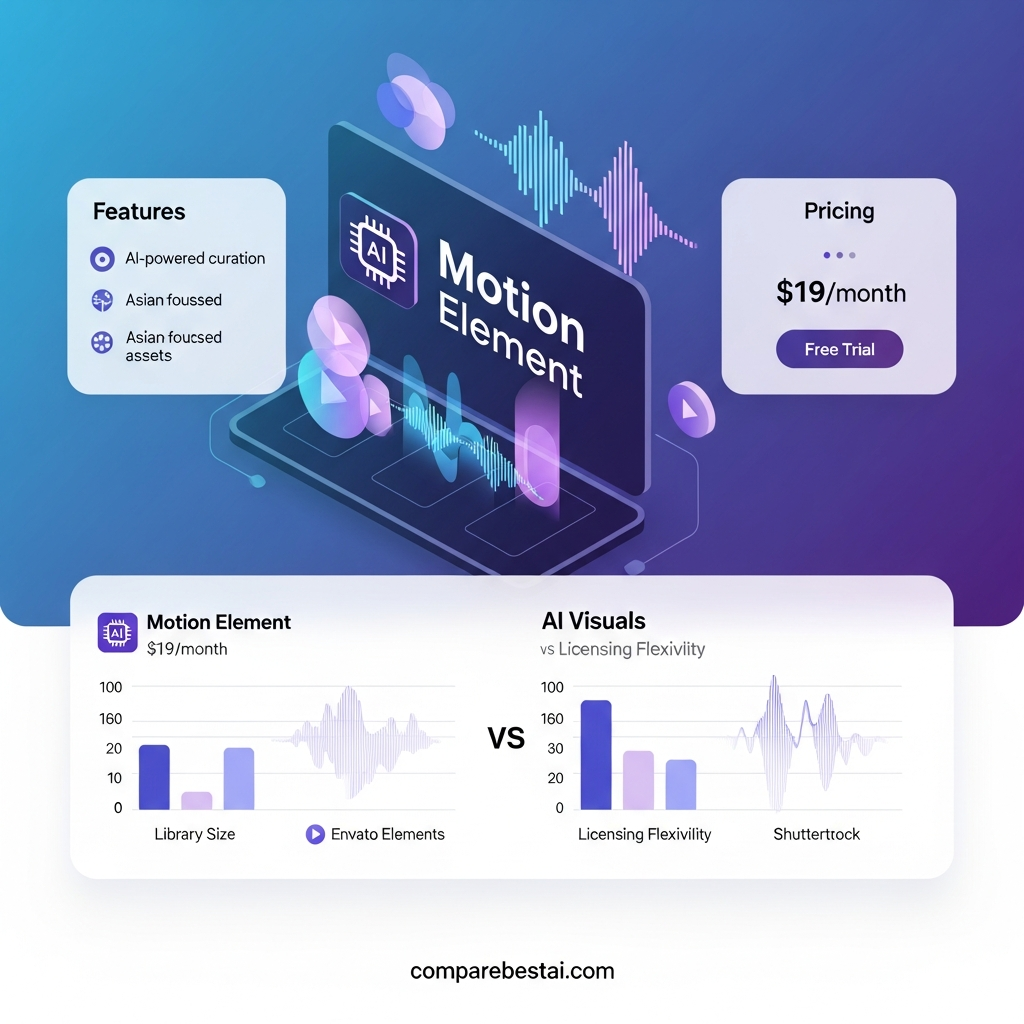

Quick Answer: Is MotionElements Worth It?
MotionElements is worth considering if you regularly need stock footage, video templates, music, sound effects, images, and AI generation tools in one platform.
Its current Pro Plan combines unlimited downloads from a 26M+ Subscription Catalog with 1,000 monthly AI coins, AI Remix, and access to more than 100 AI models for video, image, and voice generation.
MotionElements is particularly useful for video editors, YouTubers, freelancers, agencies, and creative teams that use stock assets frequently. The annual Pro Plan offers stronger value than monthly billing for regular users, while Pay Per Item is better suited to occasional buyers.
The main limitation is that the standard Pro subscription uses a single-user license. Businesses that need multiple licensed users should evaluate the separate Team Plan.
Pricing and features verified August 2026.
See current MotionElements Pro pricingKey Takeaways
- MotionElements combines stock-media downloads with generative AI tools in its current Pro Plan.
- Pro includes unlimited downloads from a 26M+ Subscription Catalog.
- Subscribers receive 1,000 AI coins each month for supported video, image, and voice models.
- MotionElements currently provides access to more than 100 AI models.
- AI VisualSearch and AudioSearch help users find visually or sonically similar stock content.
- Pay Per Item starts from $1 for occasional buyers.
- The Pro Plan costs $39 monthly or $198 annually.
- MotionElements uses a broad royalty-free licensing model for eligible personal and commercial projects.
- Standard Pro is single-user. Companies needing several licensed users can use the Team Plan.
- Registered members can access free stock downloads each week.
| Platform | Best For | Current MotionElements Position |
|---|---|---|
| MotionElements | Stock + AI in one subscription | Unlimited eligible stock plus AI generation and Remix |
| Envato | Broad creative assets | Strong multi-category creative subscription |
| Storyblocks | High-volume stock users | Unlimited stock-focused workflow |
| Shutterstock | Premium and editorial stock | Large commercial and editorial library |
1 Pricing as of June 2026. Vendor promotions and discounts may apply.
2 Motion Element standard plan; see full breakdown below.
3 Source: Envato Pricing
4 Source: Shutterstock Pricing
5 Source: Storyblocks Pricing
What Is MotionElements?
MotionElements is a royalty-free stock-content marketplace and AI creative platform designed primarily for video creators.
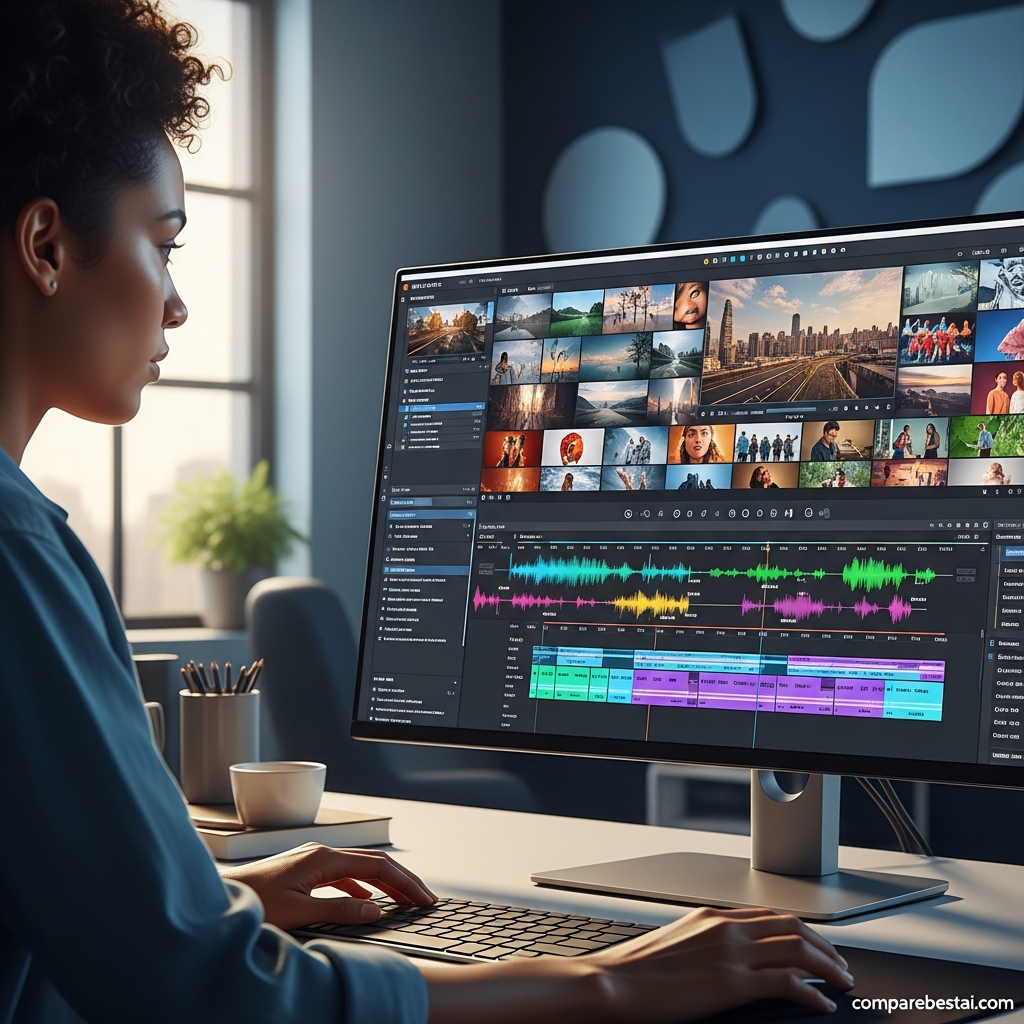
Its marketplace includes stock footage, video templates, music, sound effects, images, vectors, 3D assets, Lottie animations, and other creative content.
The current Pro Plan also adds generative AI. Subscribers can use AI coins across supported video, image, and voice models and can use AI Remix to transform eligible stock assets into new creative variations.
MotionElements therefore sits between a traditional stock marketplace and newer AI-generation platforms.
Users can purchase individual assets when needed, subscribe to Pro for unlimited eligible stock downloads and AI tools, or use a Team Plan when several people need licensed access.
MotionElements Features
26M+ Subscription Catalog
MotionElements' Pro subscription currently includes unlimited downloads from a Subscription Catalog containing more than 26 million eligible stock assets.
Available categories include stock footage, video templates, music, sound effects, images, vectors, animation assets, and other creative media.
Not every item in the full MotionElements marketplace is necessarily included in the subscription, so users should check whether an asset carries the subscription indicator before relying on unlimited access.
Studio AI and AI Generation
MotionElements now includes built-in generative AI tools.
The Pro Plan includes 1,000 AI coins each month for supported video, image, and voice-generation models.
MotionElements currently provides access to more than 100 AI models, allowing creators to use different generation engines without maintaining a separate subscription for every provider.
AI coin consumption varies by model and generation settings.
AI Remix
AI Remix connects traditional stock content with generative AI.
Creators can take eligible stock assets into MotionElements' AI tools and generate variations, animate images, transform visual styles, or upscale video.
This makes the platform more than a conventional download-only stock marketplace.
VisualSearch
MotionElements' AI-powered VisualSearch lets users upload an image or video reference and search for visually similar footage, images, and templates.
This can be useful when the creator knows the visual style or composition they want but cannot describe it accurately with keywords.
AudioSearch
AudioSearch performs a similar function for music.
Users can provide a reference audio file or supported online reference and find tracks with similar characteristics such as mood, genre, rhythm, tempo, or overall feel.
Marketplace API
MotionElements provides a Marketplace API for developers.
The current API can be used to search, purchase, and download supported stock video and audio through an external application or workflow.
Organizations planning API-based integrations should review the current API documentation to confirm supported media types and usage requirements.
Team Plan
MotionElements also provides a Team Plan for companies that need more than one licensed user.
Current Team Plan features include:
- Multiple users
- Sub-accounts
- Access controls
- Budget allocation
- Centralized storage
- Team administration
- Unlimited downloads from the Subscription Catalog
The Team Plan is billed annually rather than monthly.

MotionElements Pricing
MotionElements currently offers Pay Per Item, Pro, and Team options rather than the older tiered download plans.
Pay Per Item
Individual assets can be purchased without a subscription.
Prices currently start from $1, although the final price varies by asset.
This is best for users who only need occasional stock content.
Pro Monthly
The monthly Pro Plan currently costs $39 per month.
It includes unlimited downloads from the Subscription Catalog, 1,000 monthly AI coins, AI Remix, and access to more than 100 AI models.
Pro Annual
Annual Pro costs $198 per year, equivalent to $16.50 per month.
For creators who expect to use MotionElements throughout the year, this provides substantially better value than paying monthly.
Team Plan
Businesses needing several licensed users can use the Team Plan.
Team pricing is handled separately and the plan is billed annually.
It adds multi-user licensing, sub-accounts, access controls, budget management, centralized asset storage, and team administration.
Explore MotionElements Team optionsCan You Use MotionElements for Free?
MotionElements currently offers free stock downloads to registered members.
Members can download five eligible free stock items each week, with referral activity potentially increasing the weekly allowance.
This is a more accurate way to describe free access than calling the platform's current offer a seven-day Pro trial.
MotionElements also currently advertises a 14-day money-back guarantee for Pro when no stock content has been downloaded and no AI coins have been used.
For a full breakdown of current plan costs and license requirements, see our dedicated Motion Element Pricing 2026: Subscription and License Options Explained guide.
For always-updated breakdowns and promotions, or to get price alerts on plan drops, subscribe for free.
MotionElements Licensing
MotionElements uses a royalty-free licensing model for its stock marketplace.
Eligible licensed content can generally be used worldwide across personal and commercial projects, including:
- Websites
- Social media
- YouTube
- Advertising
- Commercials
- Broadcast
- TV and films
- Games
- Presentations
- Client projects
Licensed content does not normally require an additional recurring licensing fee after purchase or download.
However, users should still review individual asset details.
Some assets may be marked Editorial Use Only, and certain P.R.O.-registered music tracks have additional attribution or cue-sheet considerations for public performance or broadcast.
MotionElements also prohibits users from redistributing or reselling isolated raw stock assets as standalone content.
The standard Pro subscription is licensed to one user. Organizations needing multiple people to edit or use licensed stock content should evaluate the Team Plan.
MotionElements Pros and Cons
Pros
- 26M+ assets in the Subscription Catalog
- Unlimited eligible stock downloads with Pro
- Built-in AI video, image, and voice generation
- 100+ AI models available
- 1,000 monthly AI coins with Pro
- AI Remix for transforming stock assets
- AI VisualSearch and AudioSearch
- Broad royalty-free commercial licensing
- Pay Per Item option for occasional users
- Public Marketplace API
- Dedicated Team Plan for multi-user organizations
- Free stock downloads available each week
Cons
- Standard Pro uses a single-user license
- Not every marketplace asset is necessarily included in the Subscription Catalog
- AI usage is limited by monthly coin allowances
- AI coin consumption varies between models and settings
- Heavy AI-generation users may need additional coins
- Team access requires a separate annually billed plan
- Editorial and other specially labeled assets may have additional restrictions
- Stock assets are non-exclusive and can be licensed by other customers
Who Should Use MotionElements?
MotionElements is best suited to creators who regularly use both stock content and AI media tools.
Video Editors
Video editors can use MotionElements for footage, After Effects templates, Premiere Pro assets, DaVinci Resolve resources, music, sound effects, and AI-generated media.
YouTubers and Social Creators
Frequent content creators can benefit from unlimited eligible stock downloads and a single place to source footage, music, graphics, and AI-generated assets.
Freelancers
Freelancers producing client work can use MotionElements' royalty-free licensing across eligible commercial projects while combining traditional stock assets with AI generation.
Agencies and Creative Teams
A Team Plan is available for agencies and companies that need several licensed users, centralized assets, budget controls, and account administration.
Occasional Buyers
Users who only need a small number of assets each year may get better value from Pay Per Item rather than subscribing.
How We Evaluated MotionElements
We evaluated MotionElements using current first-party documentation covering:
- Pro pricing
- Pay Per Item purchasing
- Team Plan features
- Subscription Catalog size
- Studio AI and AI coins
- VisualSearch
- AudioSearch
- Marketplace API
- Royalty-free licensing
- Free stock downloads
Product details and pricing were checked against MotionElements' official website and documentation in August 2026.
Because pricing, AI models, catalog size, and product features can change, buyers should verify the latest information directly with MotionElements before purchasing.
How It Compares to Top Alternatives
The stock asset space is crowded, with leading platforms like Envato Elements, Storyblocks, Shutterstock, Pond5, and Artgrid each offering slightly different strengths. For professionals weighing motion element competitors, these nuances matter in terms of price, asset diversity, user experience, and legal peace of mind.
For those interested in a direct side-by-side with another leading platform, check out our detailed Motion Element vs Storyblocks 2026: Which Should You Use? guide.
Motion Element vs Envato Elements: Envato Elements is best known for its “all-in-one” creative library (graphics, fonts, templates, audio, and video) at a flat price. Its global selection is vast, but some licensing restrictions—especially for YouTube and commercial usage—have caused confusion for agencies working with international clients (source). Motion Element, by contrast, applies a single, perpetual, commercial license for almost everything, and is stronger in Asian-region content. If your work is multi-format (video + graphics), Envato might edge out on value, but for heavy video usage with international deployments, Motion Element pulls ahead.
Motion Element vs Storyblocks: Storyblocks’ primary value is truly unlimited downloads for a single monthly price, but the platform’s library is somewhat less regionally focused than Motion Element (see source). Storyblocks also focuses on rapid, no-frills UX and appeals to small teams and fast-moving independents. If you need 50+ assets per month for digital-only content, Storyblocks can be strong; but for agencies concerned about licensing complexity or regionally appropriate assets, Motion Element provides peace of mind and stronger team controls.
Motion Element vs Shutterstock: Shutterstock reigns at the top-end of commercial stock, with an unrivaled library of editorial, premium video, and broadcast-quality footage. Pricing reflects this: $29+ per month for base plans, and significant upcharges for HD and 4K or commercial use scenarios. Shutterstock is a common choice for TV, film, or top-tier advertising agencies needing specific looks. Most users find Motion Element a more budget-friendly, all-rounder solution for high-volume, practical usage, especially for web, social, and regional content.
Motion Element vs Artlist & Epidemic Sound: While Motion Element’s music and SFX collection is large by stock library standards, audio specialists will still prefer dedicated platforms. Artlist (from $9.99/month, source) offers massive exclusive tracks and custom licenses. Motion Element excels at blending video, SFX, and music for unified workflows—less so at serving pure musicians or podcasters looking for deep curation.
Summary: If you’re a marketer, video producer, or agency supporting diverse regional campaigns, Motion Element beats most at localization and licensing clarity. For those who want unlimited everything at rock-bottom prices (and are willing to live with narrower licensing or generic libraries), the industry giants still hold their ground. For pure music or one-off ultra-premium needs, a specialized vendor remains best.
Alternatives to Motion Element
While Motion Element offers a great combination of quality, flexibility, and price for many professional content creators and agencies, there are strong contenders worth considering if your needs are specific or your budget differs.
For those looking for a roundup of competitor tools with varied features, see our expert list of 10 Best Motion Element Alternatives for Stock Footage in 2026.
Envato Elements: Envato is unparalleled in sheer creative diversity—millions of stock videos, UX templates, web fonts, and graphics under a single $16.50/month subscription. However, its commercial licensing policy can require careful review, and some regionally targeted content is sparse.
Storyblocks: With unlimited downloads in all plans starting at $30/month, Storyblocks appeals to individual freelancers and small creative studios that need lots of raw assets quickly for social and web projects. The trade-off is a less curated and region-focused collection but unbeatable low-effort value for high-volume/on-demand needs.
Shutterstock: For premium, news, or enterprise clients needing editorial, archival, or ultra-premium footage, Shutterstock remains the gold standard, with prices and license tiers to match. Large agencies may still keep a Shutterstock subscription for one-off prestige projects.
Artgrid, Pond5, and Epidemic Sound: These niche platforms excel in cinema-style video (Artgrid & Pond5), or in-depth, royalty-free music and SFX (Epidemic Sound). If your work is heavily audio-first or high-production video, consider Auditioning these alongside Motion Element for niche value.
Free asset resources (like Pexels or Pixabay) can supplement paid subscriptions for basic, non-commercial needs. However, serious teams should exercise caution on licensing—commercial projects often require the bulletproof clarity paid platforms like Motion Element are known for.
Frequently Asked Questions About MotionElements
What is MotionElements?
MotionElements is a royalty-free stock marketplace and AI creative platform offering footage, video templates, music, sound effects, images, and other media. Its current Pro Plan also includes AI generation and Remix tools.
How much does MotionElements cost?
MotionElements Pro currently costs $39 per month or $198 per year. Annual billing works out to $16.50 per month. Pay Per Item purchases start from $1.
Does MotionElements have a free plan?
MotionElements provides free stock downloads rather than a permanent free Pro subscription. Registered members can currently download five eligible free stock assets per week.
Does MotionElements offer a free trial?
The current public offer is better described as free weekly stock downloads rather than a standard seven-day Pro trial. MotionElements also currently offers a 14-day money-back guarantee subject to usage conditions.
Does MotionElements have AI video generation?
Yes. MotionElements' current Studio AI supports video, image, and voice generation using more than 100 available AI models.
What is AI Remix?
AI Remix lets creators take eligible stock assets into MotionElements' AI tools and create variations, animate images, transform visual content, or upscale video.
Does MotionElements have AI search?
Yes. VisualSearch helps find similar visual stock content from an image or video reference, while AudioSearch helps users find music similar to a reference track.
Does MotionElements have an API?
Yes. MotionElements currently provides Marketplace API v2, which supports searching, purchasing, and downloading supported stock video and audio programmatically.
Can I use MotionElements commercially?
Yes. MotionElements' royalty-free license generally supports personal and commercial use worldwide across eligible media. Users should still check individual assets for labels such as Editorial Use Only or other special conditions.
Can several people share a MotionElements Pro account?
The standard subscription uses a single-user license. Companies that need multiple licensed users should use the Team Plan.
Is MotionElements worth it?
MotionElements is worth considering for creators who regularly need stock footage, templates, music, sound effects, and AI generation tools. The annual Pro Plan offers the strongest value for frequent users, while occasional buyers may be better served by Pay Per Item.
Final Verdict: Is MotionElements Worth It in 2026?
MotionElements is a strong option for video creators who want stock media and generative AI tools inside one platform.
Its biggest advantage in 2026 is the combination of unlimited eligible stock downloads, a 26M+ Subscription Catalog, AI Remix, 1,000 monthly AI coins, and access to more than 100 AI models.
That makes MotionElements particularly attractive to video editors, YouTubers, freelancers, marketers, and small creative studios that regularly need footage, templates, music, sound effects, and AI-generated content.
The annual Pro Plan offers the best value for regular single users, while Pay Per Item makes more sense for occasional projects.
Larger organizations should evaluate the separate Team Plan because the standard Pro subscription is licensed to one person.
MotionElements is no longer best described as simply a traditional stock-footage marketplace. Its combination of stock media, AI search, AI generation, Remix tools, and flexible purchasing options makes it a broader creative platform worth testing in 2026.
Check current MotionElements pricingInterested in a roundup of other leading options for creative teams? Explore the Best AI Tools for Content Creation in 2026 (Top Picks) to further enhance your workflow.
Found this guide useful? Share it with your team.