
By CompareBestAI
Quick Answer: The best search engine optimization tools in 2026 depend on the job. Semrush is our top all-in-one pick for SEO and AI-search visibility, Ahrefs is strongest for backlink and competitive research, Google Search Console is the essential free source of Google performance data, Screaming Frog is best for technical crawling, SE Ranking combines SEO and GEO tracking for teams, Surfer specializes in content optimization, and Ubersuggest is the most affordable all-in-one option in this shortlist.
The best SEO stack usually combines more than one data source.
A paid platform can help with keyword research, competitor analysis, backlinks, rank tracking, technical audits, content optimization, and AI-search monitoring. But it should complement not replace first-party data from Google Search Console.
Google describes SEO as helping search engines understand your content and helping users find your site. Its current guidance also emphasizes useful, reliable, up-to-date content rather than shortcuts designed only for algorithms.
In 2026, search visibility has expanded further. SEO teams increasingly monitor not only traditional rankings but also visibility across AI Overviews, AI Mode, ChatGPT, Gemini, and Perplexity. Google's May 2026 generative-AI guidance specifically reinforced that established SEO best practices continue to matter for its AI search experiences.
Best SEO Tools in 2026 at a Glance
| Rank | Tool | Best For | Free Option | Paid Starting Point |
|---|---|---|---|---|
| 1 | Semrush | All-in-one SEO + AI visibility | Limited free access | SEO $139/month |
| 2 | Ahrefs | Backlinks, competitors and content opportunities | Ahrefs Free | Starter $29; Lite $129/month |
| 3 | Google Search Console | First-party Google performance and indexing | Yes | Free |
| 4 | Screaming Frog SEO Spider | Technical SEO crawling | 500 URLs | $279/year |
| 5 | SE Ranking | SEO + GEO for teams and agencies | 14-day trial | Core $129/month |
| 6 | Surfer | Content optimization + AI visibility | Trial/free entry varies | Discovery $49/month billed yearly |
| 7 | Ubersuggest | Budget all-in-one SEO | Limited free access | Individual $29/month |
Pricing checked September 7, 2026. Vendors frequently change plan names, limits, discounts, and AI features, so verify current pricing before subscribing.
Compare before subscribing: start with Google Search Console, identify the SEO problem you cannot solve efficiently for free, then test one paid platform against that exact workflow.

How We Evaluated These SEO Tools
This comparison focuses on practical software fit rather than assigning arbitrary numeric scores.
We evaluated the products across seven factors:
1. Keyword and Competitor Research
Can the platform help identify search demand, ranking competitors, topic gaps, and realistic opportunities?
2. Technical SEO
Does it help detect crawling, indexing, redirect, metadata, internal-linking, duplicate-content, JavaScript, or structured-data problems?
3. Backlink Intelligence
Can users evaluate their own backlink profile and compare it with competitors?
4. Rank and Visibility Tracking
Does the tool help monitor changes across keywords, pages, devices, locations, or search surfaces?
5. AI Search Visibility
In 2026, we also consider whether a platform can monitor brand mentions, citations, prompts, or visibility across AI search systems.
6. Usability and Workflow Fit
More data is not automatically better. A tool only creates value if the intended user can turn the data into decisions.
7. Cost and Limits
We evaluate entry price alongside crawl limits, projects, keywords, credits, users, AI prompts, reports, and add-ons.
For more information about the site's evaluation framework, see how CompareBestAI ranks tools.
1. Semrush — Best All-in-One SEO Tool
Best for: Agencies, marketers, in-house SEO teams, competitive research, rank tracking, audits, keyword research, and AI-search visibility.
Semrush is our top all-in-one pick because it covers most of the recurring SEO workflow inside one ecosystem.
Its current SEO plan includes keyword research, competitor analysis, Position Tracking, Site Audit, and AI-search monitoring. Semrush currently lists the SEO plan at $139/month, or $117.33/month equivalent when billed annually.
What Semrush Does Well
Semrush is especially useful when one team needs to manage:
- Keyword research.
- Competitor discovery.
- Rank tracking.
- Site audits.
- Backlink research.
- Content opportunities.
- Multiple websites.
- AI visibility.
Its current SEO + AI Search packaging reflects an important 2026 shift: traditional Google ranking data and generative-search visibility are increasingly being measured together. Semrush's current plans include AI visibility reporting and prompt monitoring on selected tiers.
Where Semrush Can Be Too Much
Semrush is broad.
That is valuable for agencies and multi-channel teams, but a small website owner may pay for dozens of reports they rarely use.
If your main requirement is only technical crawling or backlink research, a specialist product may be more economical.
Read our detailed Semrush SEO review or explore Semrush AI.
Verdict: Semrush is the strongest starting point here for teams that want one platform covering most SEO disciplines plus emerging AI visibility.
2. Ahrefs — Best for Backlinks and Competitive SEO Research
Best for: Backlink analysis, competitor research, keyword research, content gaps, rank tracking, and search-market intelligence.
Ahrefs is particularly strong when your SEO strategy depends on understanding why competitors rank and where their authority comes from.
Current Ahrefs pricing starts with Starter at $29/month, while the more complete Lite plan costs $129/month. Ahrefs Free also provides limited access for verified sites.
Useful Ahrefs Capabilities
The current Ahrefs platform includes:
- Site Explorer.
- Keywords Explorer.
- Site Audit.
- Rank Tracker.
- Competitive Analysis.
- Backlink research.
- SERP history.
- Web Analytics.
- AI/Brand Radar capabilities on supported plans.
Its current pricing page also includes tracked AI prompts in the core paid plans, showing how traditional SEO research and AI visibility are beginning to converge.
Ahrefs vs Semrush
Choose Ahrefs when backlink research, competitor-page analysis, content opportunities, and search datasets are central to your workflow.
Choose Semrush when you prefer a wider all-in-one marketing/SEO environment with stronger integration across multiple marketing workflows.
You do not necessarily need both.
Explore Ahrefs on CompareBestAI.
Verdict: Ahrefs is one of the strongest choices for SEOs who make decisions from backlink, keyword, competitor, and content-opportunity data.
3. Google Search Console — Best Free SEO Tool
Best for: Google indexing, clicks, impressions, queries, pages, crawl issues, and search-performance monitoring.
Google Search Console should be part of almost every SEO stack because it provides something third-party platforms cannot fully replace:
data directly from Google about your own website's performance in Google Search.
Google describes Search Console as a free service that helps site owners monitor, maintain, and troubleshoot their presence in Google Search. It provides information about queries, clicks, impressions, indexing problems, links, and other search issues.
What Search Console Is Best For
Use it to answer questions such as:
- Which queries already generate impressions?
- Which pages are gaining or losing clicks?
- Is Google indexing an important URL?
- Does a page have a crawling or indexing issue?
- Which countries generate search visibility?
- Which pages have search demand but poor CTR?
What Search Console Does Not Replace
Search Console is not a complete competitor-intelligence platform.
It will not give you the same level of third-party competitor keyword research, broad backlink comparisons, content optimization, or technical crawling as specialized SEO software.
Google also says you do not need to check Search Console every day; checking regularly and after major site changes is generally more useful.
Verdict: Start with Google Search Console before buying anything. Paid SEO data makes more sense when you already understand what first-party data is telling you.
4. Screaming Frog SEO Spider — Best Technical SEO Tool
Best for: Crawling websites, technical audits, redirects, metadata, canonicals, hreflang, structured data, duplicate content, JavaScript, and internal-link analysis.
Screaming Frog SEO Spider is fundamentally different from Ahrefs or Semrush.
Instead of being primarily a cloud-based competitive research platform, it crawls websites in a way that allows technical SEOs to inspect site architecture and implementation at scale.
The free version currently crawls up to 500 URLs. The paid licence removes that limit and adds features including scheduling, JavaScript rendering, crawl comparison, structured-data validation, custom extraction, Google Search Console integration, PageSpeed Insights integration, and advanced configuration. The US licence is currently $279 per year per user.
What Screaming Frog Is Excellent At
It can help uncover:
- Broken links.
- Redirect chains.
- Missing titles.
- Duplicate metadata.
- Canonical issues.
- Hreflang errors.
- Internal-link patterns.
- Orphan-page clues.
- Structured-data problems.
- JavaScript-rendering issues.
- Near-duplicate content.
Where It Falls Short
Screaming Frog is not primarily a keyword database, backlink intelligence platform, or rank tracker.
It works best alongside Search Console, Ahrefs, Semrush, or another search-data provider.
Explore Screaming Frog SEO Spider.
Verdict: If your biggest SEO problems are technical rather than competitive, Screaming Frog may deliver more practical value than another expensive all-in-one subscription.
5. SE Ranking — Best for SEO + GEO Teams
Best for: Agencies, in-house teams, rank tracking, audits, competitive analysis, reporting, and AI-search monitoring.
SE Ranking has moved beyond being primarily an affordable rank tracker.
Its current product structure combines traditional SEO with GEO/AI visibility, including daily keyword tracking, prompt tracking, AI competitive research, backlink analysis, site auditing, and content workflows.
The current Core plan costs $129/month, or $103.20/month equivalent on annual billing, and includes 2,000 daily tracked keywords, 100 AI prompts, 10 projects, and up to 250,000 audited pages per month.
Why SE Ranking Is Interesting in 2026
The platform's value proposition is increasingly clear for teams that want:
SEO + rank tracking + reporting + AI visibility
without stitching together several separate tools.
Main Limitation
The platform now has several plans and add-ons.
You should check whether your required AI prompts, tracked keywords, seats, API usage, and projects are included before comparing price with competitors.
Explore SE Ranking.
Verdict: SE Ranking is a strong fit for teams that need operational SEO and AI-search monitoring in the same workflow.
6. Surfer — Best for Content Optimization
Best for: SEO content briefs, page optimization, content scoring, topical coverage, and AI-search-oriented content workflows.
Surfer is more specialized than Semrush or Ahrefs.
Its strength is helping content teams evaluate whether a draft adequately covers a search topic and where the content may be missing relevant concepts.
Current pricing lists Discovery at $49/month billed yearly and Standard at $99/month billed yearly. Surfer's current platform also includes AI-search features on selected plans, including AI visibility tracking and prompt monitoring.
What Surfer Is Good At
It can help with:
- Content briefs.
- SERP-based optimization.
- Topic coverage.
- Content scoring.
- Page optimization.
- AI-assisted writing workflows.
- Search and AI-visibility monitoring.
Critical Limitation
A content score is not a Google ranking factor.
Do not add every term simply because software recommends it.
Google's own SEO guidance emphasizes useful, unique, well-organized, people-first content rather than mechanical optimization for every possible phrase.
Verdict: Surfer is valuable when your main bottleneck is scaling content optimization, but it should support editorial judgment—not replace it.
7. Ubersuggest — Best Budget All-in-One SEO Tool
Best for: Small businesses, solo marketers, beginners, bloggers, basic competitor research, keyword discovery, and rank tracking.
Ubersuggest remains one of the lowest-cost paid all-in-one options in this comparison.
Its current Individual plan costs $29/month, followed by Business and Enterprise/Agency tiers. The platform now combines keyword research, rank tracking, site auditing, backlink analysis, competitor research, and AI-search visibility features.
Why Ubersuggest Is Useful
The biggest advantage is accessibility.
A small site owner may need:
- Keyword ideas.
- Basic rank tracking.
- Site audits.
- Content ideas.
- Backlink information.
- Competitor analysis.
but may not need the scale or advanced datasets of a $100–$300 monthly SEO platform.
Main Limitation
Lower cost comes with lower limits and less depth in some workflows.
Agencies, large publishers, and advanced technical teams may outgrow those limits.
Explore Ubersuggest.
For more lower-cost options, see our guide to affordable SEO tools.
Verdict: Ubersuggest is the strongest budget pick here for users who want several core SEO functions without paying premium all-in-one pricing.
Best SEO Tool by Use Case
| SEO Need | Best Starting Choice |
|---|---|
| All-in-one SEO platform | Semrush |
| Backlinks and competitor research | Ahrefs |
| Google Search performance | Google Search Console |
| Technical SEO crawling | Screaming Frog |
| SEO + GEO / AI visibility | SE Ranking |
| Content optimization | Surfer |
| Budget all-in-one | Ubersuggest |
There is no requirement to choose only one tool forever.
The better question is which combination gives you reliable data without paying for overlapping functionality.
What Changed in SEO Tools in 2026?
The biggest change is not that traditional SEO disappeared.
It didn't.
Google's May 2026 documentation update explicitly says established SEO best practices continue to be relevant for generative AI features in Search.
What changed is the measurement layer.
Modern SEO platforms increasingly track:
- Traditional rankings.
- AI Overviews.
- AI Mode.
- ChatGPT mentions.
- Gemini visibility.
- Perplexity citations.
- Brand sentiment.
- Prompt-level visibility.
Ahrefs, Semrush, SE Ranking, Surfer, and Ubersuggest now expose different versions of this functionality.
That does not mean you need a separate “GEO trick.”
It means teams increasingly need to measure where their content and brand appear beyond conventional ten-blue-link SERPs.
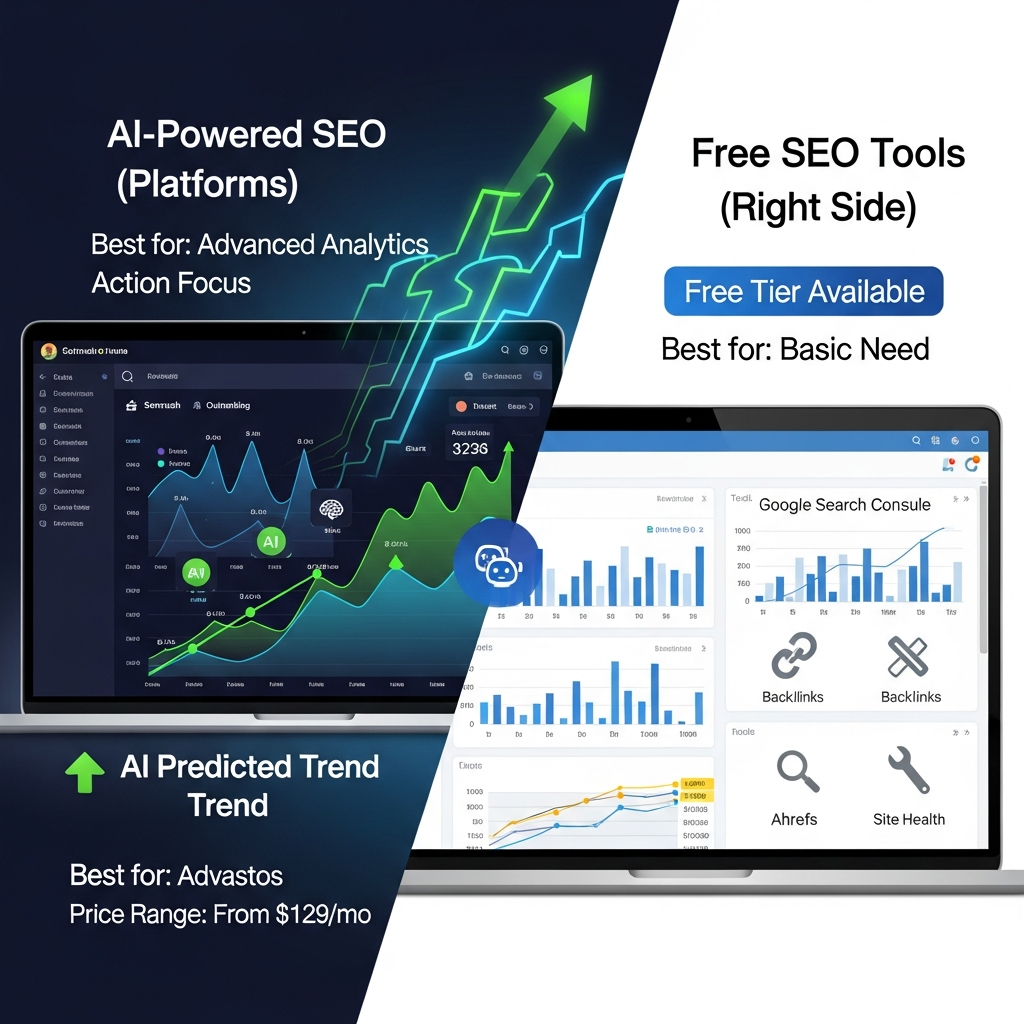
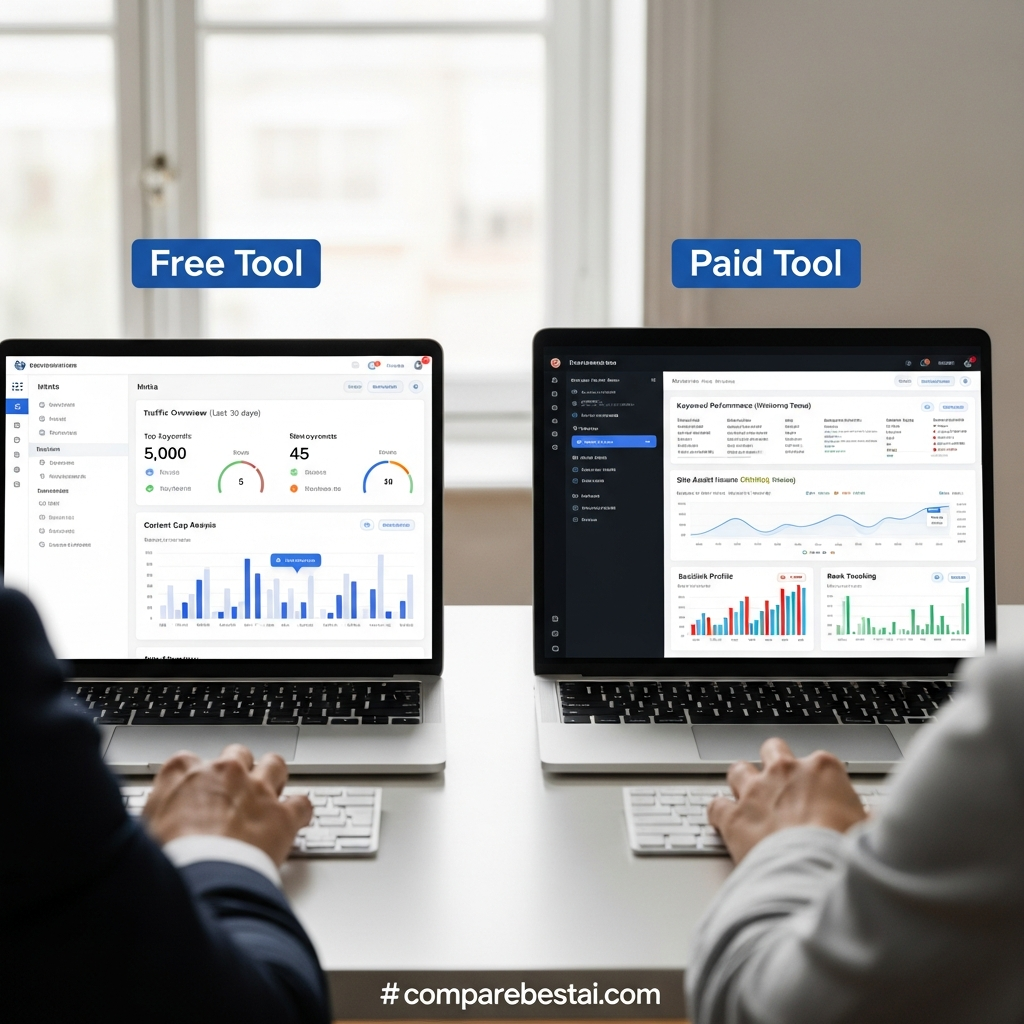
Are Free SEO Tools Enough?
For a small website, a strong free stack can cover many essential tasks.
Start with:
- Google Search Console for search performance and indexing.
- Screaming Frog's free 500-URL crawl for smaller websites.
- Free or limited accounts from paid providers for occasional research.
But free tools typically become restrictive when you need:
- Large competitor datasets.
- Historical keyword data.
- Daily rank tracking.
- Full backlink indexes.
- Large scheduled site audits.
- Team reporting.
- API access.
- Multiple projects.
- AI visibility monitoring at scale.
Do not rely on an arbitrary claim such as “free tools cover exactly 70% of SEO.”
Your actual requirement depends on site size, competition, publishing frequency, markets, and reporting needs.
What Is the Best SEO Tool Stack?
For many businesses, the most rational stack is:
Google Search Console + one paid research platform + one specialist tool when necessary.
For example:
Small business
Google Search Console + Ubersuggest
Content-heavy website
Google Search Console + Ahrefs or Semrush + Surfer
Technical SEO team
Google Search Console + Ahrefs or Semrush + Screaming Frog
Agency
Semrush or SE Ranking + Screaming Frog + Search Console
This approach minimizes duplicate subscriptions.
If you manage a smaller company, also compare our best SEO tools for small businesses.
How to Choose the Right SEO Tool
Step 1: Identify the Missing Data
Do not begin with:
“Which SEO tool has the most features?”
Begin with:
“What decision can I not make with my current data?”
Step 2: Start With Search Console
Understand your current Google impressions, clicks, queries, pages, and indexing before buying third-party estimates.
Step 3: Define Your Main SEO Job
Choose whether your biggest need is:
- Keyword research.
- Competitor analysis.
- Backlinks.
- Technical SEO.
- Content optimization.
- Rank tracking.
- Client reporting.
- AI visibility.
Step 4: Compare Limits, Not Just Features
Two platforms can both advertise “rank tracking” while providing very different limits.
Compare:
- Keywords.
- Locations.
- Projects.
- Crawl pages.
- Competitors.
- Users.
- Historical data.
- AI prompts.
- Export limits.
Step 5: Run the Same Real Workflow
Test competing products using the same website and problem.
For example:
Find five realistic content opportunities for this domain.
Then compare the usefulness of the output.
Step 6: Measure Time Saved
The best SEO tool is not necessarily the one returning the most data.
It is the one that helps you make the right decision faster.
Step 7: Avoid Duplicate Subscriptions
If 80% of the reports you use in two platforms overlap, determine whether the remaining 20% is worth another subscription.
Which SEO Metrics Should You Trust?
Different tools use different databases and models.
That means third-party metrics such as:
- Search volume.
- Keyword difficulty.
- Traffic estimates.
- Domain authority metrics.
- Estimated competitor traffic.
should usually be interpreted as comparative estimates, not exact first-party measurements.
Google Search Console is different because it reports how your verified property actually performs in Google Search.
Use third-party tools for:
discovery and comparison
and first-party analytics for:
validation and business performance.
FAQs About Search Engine Optimization Tools
What is the best SEO tool in 2026?
Semrush is our top all-in-one pick for broad SEO and AI visibility, while Ahrefs is particularly strong for backlinks and competitive research. Google Search Console is essential for first-party Google performance data, Screaming Frog is excellent for technical audits, SE Ranking combines SEO and GEO workflows, Surfer focuses on content optimization, and Ubersuggest is a lower-cost all-in-one option.
What is the best free SEO tool?
Google Search Console is the most important free starting point for websites focused on Google Search. It provides first-party information about search queries, impressions, clicks, indexing, and crawling issues. Screaming Frog also offers a free version for websites or crawls of up to 500 URLs.
Is Ahrefs better than Semrush?
Neither platform is universally better. Ahrefs is particularly strong for backlink, keyword, content, and competitor research, while Semrush provides a broader all-in-one SEO and marketing environment. The better choice depends on the reports and workflows your team actually uses.
Which SEO tool is best for technical SEO?
Screaming Frog SEO Spider is one of the strongest specialist choices for hands-on technical crawling. It can identify broken links, redirect issues, metadata problems, canonicals, hreflang, duplicate content, structured-data issues, and many other crawlable technical signals.
Do SEO tools help with AI Overviews and AI search?
Some platforms now monitor AI-search visibility, mentions, prompts, or citations across systems such as Google AI experiences, ChatGPT, Gemini, and Perplexity. Semrush, Ahrefs, SE Ranking, Surfer, and Ubersuggest currently offer different AI-visibility capabilities.
Do I need to pay for both Ahrefs and Semrush?
Usually not at the beginning. Their capabilities overlap across keyword research, competitor analysis, rank tracking, backlinks, and site research. Test the reports you genuinely use and only maintain both subscriptions if their non-overlapping data creates enough business value to justify the cost.
Final Verdict
The best search engine optimization tool is determined by the SEO problem you need to solve.
Choose Semrush when you want broad all-in-one SEO plus AI visibility.
Choose Ahrefs when backlink intelligence, competitor analysis, and search research are central.
Use Google Search Console regardless of whether you pay for another platform.
Choose Screaming Frog for deep technical crawling.
Choose SE Ranking when your team wants SEO and GEO measurement in one operational platform.
Choose Surfer when content optimization is the bottleneck.
Choose Ubersuggest when budget matters more than having the deepest possible datasets.
The most efficient stack for many websites is not seven subscriptions.
It is:
Search Console + one strong paid research platform + one specialist tool only when a real workflow requires it.
Compare before you subscribe: identify the SEO job that consumes the most time, test two relevant tools on the same website, and pay for the platform that produces the most useful decisions—not the largest dashboard.