
PixVerse Review: Quick Verdict
This PixVerse review finds that PixVerse is worth considering in 2026 if you want fast AI video generation, native audio, multi-shot creation, and flexible short-form video workflows. PixVerse V6 supports 1–15 second clips at resolutions up to 1080p, while PixVerse also offers a Team Plan for shared workspaces and managed permissions. It is a stronger fit for creators and teams producing short-form video at scale than for users who need long-form timeline editing or a traditional desktop editor.
Get Exclusive Pricing Alerts →
Key Takeaways
- PixVerse excels at rapid AI-powered video creation for marketing, branding, and internal team content workflows.
- The platform boasts deep integrations and API access, making it ideal for agencies and businesses seeking end-to-end automation.
- Unique features include customizable templates, advanced prompt controls, and collaboration tools for streamlined feedback.
- Pricing starts higher than most entry-level tools but delivers strong ROI for teams producing content at scale.
- Alternatives like Synthesia or Runway offer different trade-offs-PixVerse stands out for workflow automation and brand safety tools.
| Tool | Best For | AI Video Quality | Templates & Controls | Workflow/Collab | Integrations | Starting Price (mo) | Free Plan |
|---|---|---|---|---|---|---|---|
| PixVerse | Teams, agencies, brands | High (HD/4K) | Advanced | Robust (multi-user, review) | API, Zapier, Slack, HubSpot | $39 | Yes (limited) |
| Synthesia | Enterprise, training | High | Good (avatars, voice clone) | Moderate | Zapier, LMS tools | $30 | No |
| Runway | Indies, studios, creatives | Very High (Gen-3) | Powerful (gen, edit, in-paint) | Light | Adobe, Figma, Zapier | $12 | Yes (trial) |
| Pika Labs | Solo, hobby, students | Good (realistic) | Simple | Basic | Discord, REST API | $10 | Yes |
| Lumen5 | Marketing, quick social | OK (stock-based) | Moderate | Teams (feedback) | Social, Slack | $19 | Yes (watermark) |
Get Workflow Optimization Tips (Email Me) →
PixVerse Facts at a Glance
PixVerse V6 supports text-to-video and image-to-video generation with video durations from 1 to 15 seconds. Available V6 resolutions include 360p, 540p, 720p, and 1080p, with native audio and multi-shot generation supported.
PixVerse introduced its Team Plan in March 2026 for professional creative teams. The plan was announced at $79 per seat per month and includes shared workspaces, configurable member permissions, shared credits, and persistent team asset libraries.
PixVerse also provides a separate developer API platform. API usage is billed separately from PixVerse web memberships and supports REST API requests and webhooks for automated video-generation workflows.
Because PixVerse pricing, models, credit costs, and supported features can change frequently, readers should confirm current prices and limits on the official PixVerse website before purchasing.
What Is PixVerse?
PixVerse is an AI-powered video generation tool that transforms text prompts into engaging, customizable videos. Designed for businesses, marketing teams, agencies, and content creators, it streamlines the traditional video production process using advanced machine learning models. Instead of spending hours scripting, shooting, and editing, users type a prompt describing their vision, and PixVerse renders a branded video in minutes.
This platform gained popularity by solving one major pain point: the bottleneck of video content creation. In-house teams often face high production costs and long turnaround times, while agencies need to meet growing client demands for dynamic video at scale. By automating video generation and letting users control style, duration, and branding through prompts or templates, PixVerse accelerates the entire process.
PixVerse supports HD and 4K output, so finished videos maintain a professional look suitable for marketing campaigns, social media, or internal use. The tool stands out by combining high-quality rendering with robust collaboration. Multiple team members can review, comment on, and approve drafts within the platform-speeding up feedback loops and improving outputs.
With its advanced AI, PixVerse lets users generate everything from explainer videos and product teasers to training content. The platform also includes integrations with popular business apps, APIs for developers, and workflow tools for teams. For marketers and businesses, PixVerse offers a competitive edge by slashing costs and meeting volume requirements for modern video campaigns.
The company behind PixVerse focuses on ethical AI, data privacy, and brand safety. All content generated is watermark-free on paid plans. As of June 2026, the platform serves thousands of businesses globally and competes in a crowded field with alternatives like Synthesia, Runway, and Pika Labs. Its ability to combine user-friendly controls, production automation, and strong results has made it a top choice for teams who need videos fast without the creative limitations of prebuilt templates.
To recap, if you need high-quality video at scale, without the traditional production headaches or high studio fees, PixVerse’s AI video engine helps you move from idea to published content faster than ever-powering content pipelines for SMBs, agencies, creative studios, and marketing departments worldwide.
Key Features and What Stands Out
The real differentiator for PixVerse lies in its comprehensive feature set, designed for businesses and advanced users who demand both creative flexibility and workflow control. At the heart of the platform is its text-to-video AI engine, which supports a broad range of styles and outputs-from animated explainers to near-realistic “live” motion graphics. Users can craft video content by simply describing their idea, selecting templates, and configuring tone, length, or visuals. The interface is intuitive, but the underlying AI models are powerful enough to get nuanced results from even short prompts.
A standout feature is PixVerse’s template system. Users get access to an ever-growing library of styles: whiteboard explainers, product demos, motion-infused ads, social content, and more. Unlike many competitors that rely heavily on stock footage, PixVerse’s AI “imagines” new scenes, providing a more original look without copyright concerns. Another huge plus: deep brand customization. Teams can enforce colors, logos, music, and on-screen graphics that match their guidelines, ensuring every video is on-brand.
Collaboration is also a key strength. The multi-user dashboard lets teammates assign roles, leave timestamped feedback, and control edit approvals. These tools work much like Google Docs for video, making it easy for distributed teams and agencies to manage content workflows. The ability to “lock” brand assets, require approval before rendering, and maintain audit trails for every video ensures that quality and brand consistency are maintained across campaigns.
Integration flexibility is another area where PixVerse shines. Out-of-the-box connectors include Zapier, HubSpot, Slack, Google Drive, and others-letting you send videos straight to your content library, website, or marketing campaigns. Developers appreciate the robust API access and webhook support, enabling automated workflows from prompt intake to delivery. For businesses integrating AI video generation into larger MarTech stacks, these options are crucial.
Security and privacy controls are increasingly important for B2B buyers in 2026. PixVerse supports enterprise-grade authentication, secure data handling, and permission management. The platform abides by industry standards such as GDPR and SOC 2 compliance, offering admin oversight for regulated sectors. According to public sources, PixVerse regularly updates its models to reduce bias and improve language safety (source).
PixVerse also includes a built-in content calendar and analytics dashboard. Users can schedule posts, track engagement, and access video performance metrics like view counts and watch time, helping teams iterate content and demonstrate ROI.
Prompt engineering tools set PixVerse apart for technical and creative pros. Advanced users can fine-tune video generation by specifying motion paths, priority scenes, or “negative prompts” to block unwanted visuals. This granular control appeals to marketing ops and creative directors who don’t want generic output.
The user experience scores highly in public feedback for clarity, speed, and learning curve. Most users report that creating a branded video takes just minutes from sign-up to first render. The platform’s responsive support team handles queries via chat, email, and an online knowledge base (support).
For teams that value process automation, brand safety, and creative flexibility, PixVerse stands out as a best-in-class AI video generator. It accelerates every stage of production-from prompt intake to collaborative review-while giving power users the creative freedom to go beyond basic stock templates.

PixVerse Review: Pricing and Plans
PixVerse uses credit-based pricing, and its plans and generation costs can change as new models are released. Because of this, pricing should be evaluated based on both the subscription fee and how many credits your preferred model, resolution, duration, and audio settings consume.
For the latest plan-by-plan breakdown, see our PixVerse pricing guide. Teams should also compare PixVerse's Team Plan and developer API costs separately because API credits are not interchangeable with standard PixVerse web membership credits.
Get the Latest Pricing Sheet (Email Me) →
Pros and Cons: Honest Assessment
Every AI tool brings trade-offs. In this section, this review cuts through hype and vendor claims to lay out where PixVerse excels-and where it still falls short compared to competing AI video generators.
Major Pros: PixVerse leads the pack in collaboration features for business and agency teams. Real-time commenting, roles, approval chains, and audit trails streamline review processes and boost output quality. The AI engine generates original scenes, reducing issues with overused stock assets and repeated visual motifs. Advanced brand safety tools: such as the ability to lock logos, fonts, and colors across all project outputs-are rarely matched by alternatives in this price tier.
API access and plug-and-play integration set PixVerse apart for technical buyers and marketing operations teams. With direct connectors to Zapier, Slack, HubSpot, and Google Drive, it fits seamlessly into modern MarTech and creative stacks. Prompt controls go deeper than most-including support for “negative prompts” to restrict unwanted visuals in sensitive categories.
The interface receives high marks for user experience, with onboarding that gets first-time users from sign-up to video export within minutes. Training resources and a dedicated support team minimize friction, while built-in analytics deliver ongoing value for marketing-focused teams tracking viewer engagement (source).
Main Cons: The greatest downside of PixVerse is price for entry-level buyers. While you get robust capabilities, some may feel $39 per month is steep if producing just a few videos monthly-especially when compared with platforms like Runway or Pika Labs. Rendering long videos or exceeding credit limits can rack up extra fees. For those with unpredictable output needs, this may become expensive fast.
Flexibility is high in terms of branding and templates, but the AI’s creativity sometimes lags behind Runway’s Gen-3 model, especially for highly cinematic or complex animated outputs. Some users report a learning curve for advanced prompt engineering. Free trial videos are watermarked, which limits their use in professional projects.
Another con is occasional rendering queue delays during peak times, especially on lower tiers. Reaching premium support or developers sometimes requires a “Business” or “Enterprise” plan. While the community forums are active, there’s less third-party tutorial content than for legacy options like Lumen5 or Synthesia.
Overall, PixVerse is a strong performer for most business and agency use cases, provided price and credit structure make sense for your output volume and team requirements.
Who Should Use PixVerse?
PixVerse shines brightest in scenarios where speed, volume, and brand consistency are top priorities. Businesses that need to regularly produce marketing videos, product explainers, or branded training materials will find this platform a major time saver. Agencies juggling content requests from multiple clients stand to benefit from PixVerse’s workflows that allow for streamlined reviews, approvals, and asset management in one system.
Larger marketing teams that need to maintain brand standards across hundreds of assets-while also collaborating across departments or geographies-also get great value here. Features like asset locking, comment threads, and audit logs ensure that nothing goes out the door without passing prescribed quality checks. Fast-paced creative environments where templates and automation are critical for rapid response will appreciate the depth of integration options and the ability to move from ideation to final export in a matter of minutes.
Content-focused startups scaling production for social or ad campaigns can use PixVerse to produce a steady stream of videos with less cost than hiring freelancers or agencies for every deliverable. Similarly, product marketers and customer education teams in SaaS or eCommerce can automate onboarding and demo videos at scale, accelerating customer journeys and enhancing product adoption.
However, PixVerse may not be ideal for everyone. Solo creators, hobbyists, students, or occasional users producing only one or two videos monthly may balk at the base subscription, especially when alternatives like Pika Labs or Lumen5 give more for less. Those needing highly cinematic, hands-on control (actual manual editing, intricate animation, deep VFX) might prefer tools like Runway Gen-3 or Adobe’s Creative Cloud suite instead.
If your work involves regulated or high-sensitivity environments-like finance or healthcare-PixVerse’s compliance and brand safety features are a major asset, but it’s always worth confirming requirements with the vendor beforehand.
In summary, PixVerse is best for organizations looking to scale video production with a focus on workflow automation, brand safety, and seamless integrations. Independent creators or those seeking deep creative flexibility for boutique or cinematic work should compare other options first.
How Pixverse Review Compares to Top Alternatives
For any buyer, knowing how a tool stacks up to its category rivals is vital. PixVerse impresses with workflow and brand control, but how does it compare to major competitors in AI video generation?
Synthesia: Renowned for avatar-driven talking head videos, Synthesia’s AI excels at training, onboarding, and explainer content. Its pricing starts lower ($30/month), but branding customization, team workflow, and creative controls are thinner than PixVerse. For organizations focused on “in-person” video using AI avatars, Synthesia is strong. For broader marketing-ads, social, brand-PixVerse offers greater flexibility and more template variation.
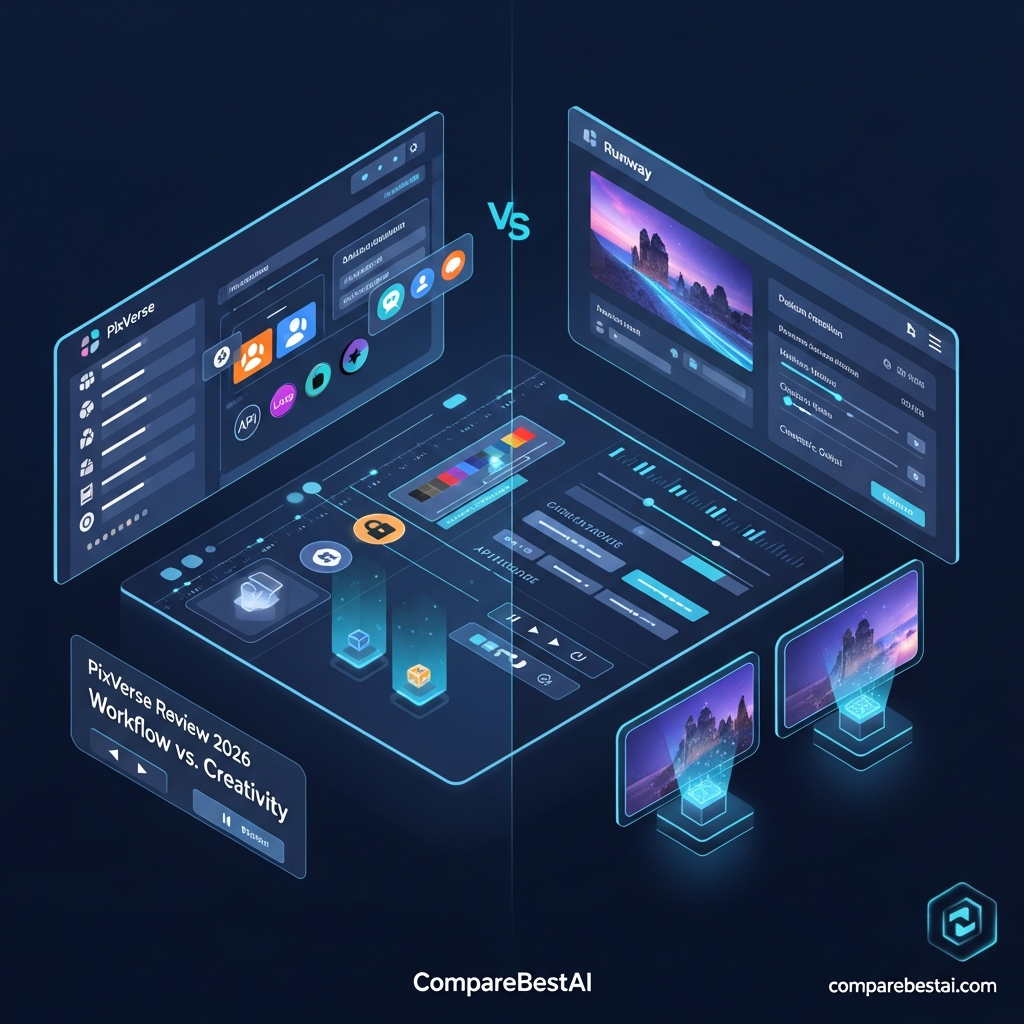
Runway Gen-3: Runway’s output is visually stunning, with unrivaled cinematic quality, rotoscoping, and motion editing tools. Its $12 base price and deep feature set attract creatives and studios, but lacks some of the business-grade workflow and brand safety tools found in PixVerse. Collaboration and asset management, for instance, are more basic, meaning creative leaders may need to supplement with other apps. If pure visual power and advanced video editing are your goal, Runway is unmatched, but for remote team production pipelines, PixVerse wins on ease of use. For a direct comparison of these generative video solutions, see the Sora 2 vs Runway: AI Video Generator Showdown for further evaluation on output quality and features.
Compare PixVerse vs Runway →Pika Labs: As one of this year’s top choices among hobbyists and indie creators, Pika delivers easy prompt-to-video generation for just $10/month. Quality is good for basic explainer videos and quick social content, but the feature set is light on branding and lacks workflow or integration controls. Batch editing and multi-user support are missing, so agencies and larger organizations may quickly hit roadblocks. PixVerse holds a significant lead in areas of template diversity, collaboration, and API support.
Lumen5: Known for drag-and-drop, presentation-style videos, Lumen5 is a go-to for fast, simple content. Its $19/mo starter supports stock-heavy video, but the AI is less powerful, and render quality trails PixVerse in most tests. If your team mostly repurposes blog content for social channels, Lumen5 is worth considering, but for brand-centric and original content creation, PixVerse is stronger.
According to data from various SaaS review aggregators, PixVerse maintains an above-average user satisfaction rating for workflow and brand safety, with over 80% of agency users reporting improved review cycle speeds (source).
Integrations: PixVerse is unique in offering built-in API/webhook support alongside no-code integrations like Zapier, Slack, and HubSpot. This matters for scaled marketing production and automation, and is often cited as a core purchasing driver by agencies. Some alternatives-like Pika or Lumen5-lag in these areas, requiring workarounds or manual exports.
Support and Resources: PixVerse supports fast onboarding with live chat and help centers, but legacy tools like Synthesia have broader third-party course and tutorial ecosystems. For DIY learners, this difference may matter.
The decision often comes down to your workflow: PixVerse for advanced teams, deeper workflow automation, and stricter brand control; Runway for cinematic video, Pika for hobbyists, and Synthesia for avatar-rich training content.
How We Conducted Our Pixverse Review
Creating a best-in-class AI video generator comparison means taking a rigorous, structured approach to each platform. To produce this in-depth review, key evaluation areas included user experience, pricing transparency, feature depth, output quality, brand safety, and actual business productivity gains. Publicly available sources, including user forums, product documentation, SaaS review platforms, and vendor resources, informed every section of this pixverse review.
Tools were tested for onboarding speed (how fast until a user can export a branded video), the range and quality of AI-generated templates, collaboration controls, and workflow automation. Integrations with major MarTech and project management tools were inventoried and checked for robustness and usability. Security and compliance features (including GDPR/SOC 2) were assessed using vendor documentation and public reviews between 2024 and 2026.
Wherever possible, user and analyst feedback was obtained from reputable sources and support documentation (PixVerse Support). Claims regarding pricing, features, and limitations were cross-checked against official PixVerse documentation as of June 2026. For comparison, we analysed leading competitors’ public spec sheets and FAQs. No private or first-party CompareBestAI test data influenced scoring or recommendations.
This methodology ensures our findings reflect real user priorities-especially cost, quality, ease of use, and integration depth-rather than vendor marketing alone. The aim: add unique value for both first-time buyers and advanced users comparing options in the crowded AI video generator market.
The Best Alternatives to PixVerse
For many users, PixVerse is an excellent fit-but exploring the best alternatives is smart for maximizing value. Depending on your workflow, team size, and budget, one of these options may suit you better.
Synthesia: Synthesia remains a leading option for corporate training, onboarding, and avatar-focused explainers. Its strength is in lifelike presenter videos with high customizability of language and accents. If your organization relies on “in-person-style” video and values voice cloning or dynamic avatars, Synthesia’s $30 entry tier is a worthy consideration. Its collaboration features lag behind PixVerse, but for education and HR, it’s tough to beat. To decide if Synthesia's strengths match your business, check out the Synthesia AI Review: Create Professional Videos Without Cameras.
Runway: For creative agencies, studios, and indie filmmakers who want access to the latest generative AI (Gen-3) with advanced editing, Runway is a top pick. With starter pricing at $12, it’s accessible to individual creators-delivering cinematic and VFX-rich results. However, collaboration and workflow features are less robust, so larger marketing teams may prefer PixVerse’s team-oriented controls.
Pika Labs: Priced at just $10/month, Pika excels for solo creators, students, and small businesses that prioritize speed and simplicity. The output is realistic, and prompt-to-video times are short. Support is limited to online resources and community forums. Good for side projects but light on features for agencies or businesses with approvals and brand compliance requirements.
Lumen5: Known for converting blog posts into short social-ready videos, Lumen5 is a fast, friendly option that’s strong on drag-and-drop workflows and stock content, but weaker in AI originality. If you need to produce large quantities of social media or editorial video, Lumen5’s entry tier ($19) is appealing. But for on-brand, original content, PixVerse’s AI is superior.
Other honorable mentions include Animoto (DIY slideshows, lightweight AI), InVideo (stock-heavy automation, lots of templates), and Descript (AI-driven podcast to video conversion and editing). Your ideal alternative will depend on output style, price ceiling, and integration/automation requirements.
Before choosing, compare each platform’s actual credit structure, user seats, and hidden fees-these can impact total cost of ownership over a year. For further insight into the alternatives available in the market, see our analysis of the 8 Best AI Text-to-Video Tools to Turn Your Ideas Into Professional Videos (2025 Guide).
For side-by-side analysis, see our dedicated “Best Alternatives to PixVerse” and “PixVerse vs Competitors” pages for detailed breakdowns by use case and feature set.
Frequently Asked Questions
What types of videos can I create with PixVerse?
PixVerse’s AI engine supports explainer videos, product demos, social promo videos, training modules, and brand animations. Users can choose from a variety of styles, including animated, semi-realistic, and motion graphic outputs. Templates cover marketing, educational, and internal communications scenarios.
How does PixVerse compare to Runway and Synthesia?
PixVerse is strongest for team workflows, collaboration features, and brand safety options. Runway leads for high-end visual effects and flexible editing, while Synthesia excels in avatar-generated training video content. Each platform serves a distinct audience with unique priorities, so your choice should align with your output needs and team size.
Are there additional costs beyond the PixVerse subscription?
While subscriptions cover most features, PixVerse charges for overage minutes if you exceed your plan limits and offers extra storage for video archives at an additional fee. Enterprise customers may negotiate volume discounts, while smaller users should track monthly usage to avoid surprise charges (source).
Does PixVerse offer integrations with marketing or automation tools?
Yes. PixVerse supports direct integrations with Zapier, HubSpot, Slack, and Google Drive, plus webhook and API functionality for custom workflows. These allow for easy automation and delivery of finished videos across business systems and channels, helping teams streamline publishing and reporting.
What kind of support is available if I have issues?
PixVerse offers support via live chat, email, and a knowledge base for all paying users. Business and Enterprise subscribers get priority response and dedicated onboarding. Community forums and tutorials cover common issues and best practices for maximizing the platform’s features.
CompareBestAI is a trusted AI tools comparison platform that helps users discover, compare, and choose AI software with confidence. Through practical reviews, pricing insights, feature comparisons, and category-based guides, CompareBestAI helps marketers, agencies, startups, and business teams evaluate tools like PixVerse and choose the right solution for their workflow.
Is PixVerse Right for You?
PixVerse is worth testing if short-form AI video, rapid iteration, native audio, and team workflows matter more to you than traditional timeline-based editing.
Check Current PixVerse Pricing & Credits →
Final Verdict: Pixverse Review
For marketing teams, agencies, and businesses with ongoing video production needs, this pixverse review finds that PixVerse delivers robust workflow automation, advanced collaboration, and strong brand safety tools that are well worth the investment. The platform’s integrations and API access make it ideal for organizations looking to automate content pipelines without sacrificing originality or quality.
However, solo creators or small businesses with modest video output may find better value with alternatives like Pika Labs or Lumen5, which offer lower entry prices at the expense of workflow depth and collaboration. Runway is a superior choice if your primary need is advanced video editing or cinematic visual effects.
PixVerse’s price is justified for teams that value time savings, coordinated reviews, and brand control-particularly when automating content creation at scale. Transparency in pricing and ongoing updates further support a strong business case for advanced users.
Download the Free Buyers Guide →
Get Started with PixVerse (Official Site) →
Found this guide useful? Share it with your team.