
Are AI tool free trials worth it?
Yes, but only if you use them right. A free trial is worth it when you test the tool on your real work, check the cancellation terms before entering a card, and note the renewal date so you're not charged by surprise. It's a waste when you sign up, forget about it, and get billed for a tool you never touched. The trick is treating a trial as a test with a deadline, not a casual signup. This guide shows you exactly what to check before you subscribe, and how to test smart.
At CompareBestAI, we sign up for a lot of AI tool trials so you don't have to. The pattern never changes: good decisions come from testing deliberately, and regrets come from auto-renewals nobody diarised.
Quick answer: Are AI tool free trials worth it?
Yes, if you test the tool on your actual work and cancel before renewal when it doesn't fit. Free trials let you evaluate a tool risk-free. They only become a problem when auto-renewal charges you for something you forgot to cancel. Always check the cancellation policy before entering payment details.
Free trial vs free plan: what's the difference?
People use these terms interchangeably, but they're not the same, and the difference affects your wallet.
- A free plan (free tier) is free forever, with limits. You can use it indefinitely without paying, like ChatGPT's free tier or Pika's free plan.
- A free trial is temporary, usually 7 to 14 days, often with full features, but it ends and typically converts to a paid subscription unless you cancel.
A free plan is a permanent home. A free trial is a test drive with a clock running.
Short answer: What's the difference between a free trial and a free plan?
A free plan is free forever with feature limits. A free trial gives temporary full access, then charges you unless you cancel. Free plans are safe to keep; free trials need a cancellation reminder.
Free plan to 15 best AI tools with free plans.
What to check before you start an AI free trial
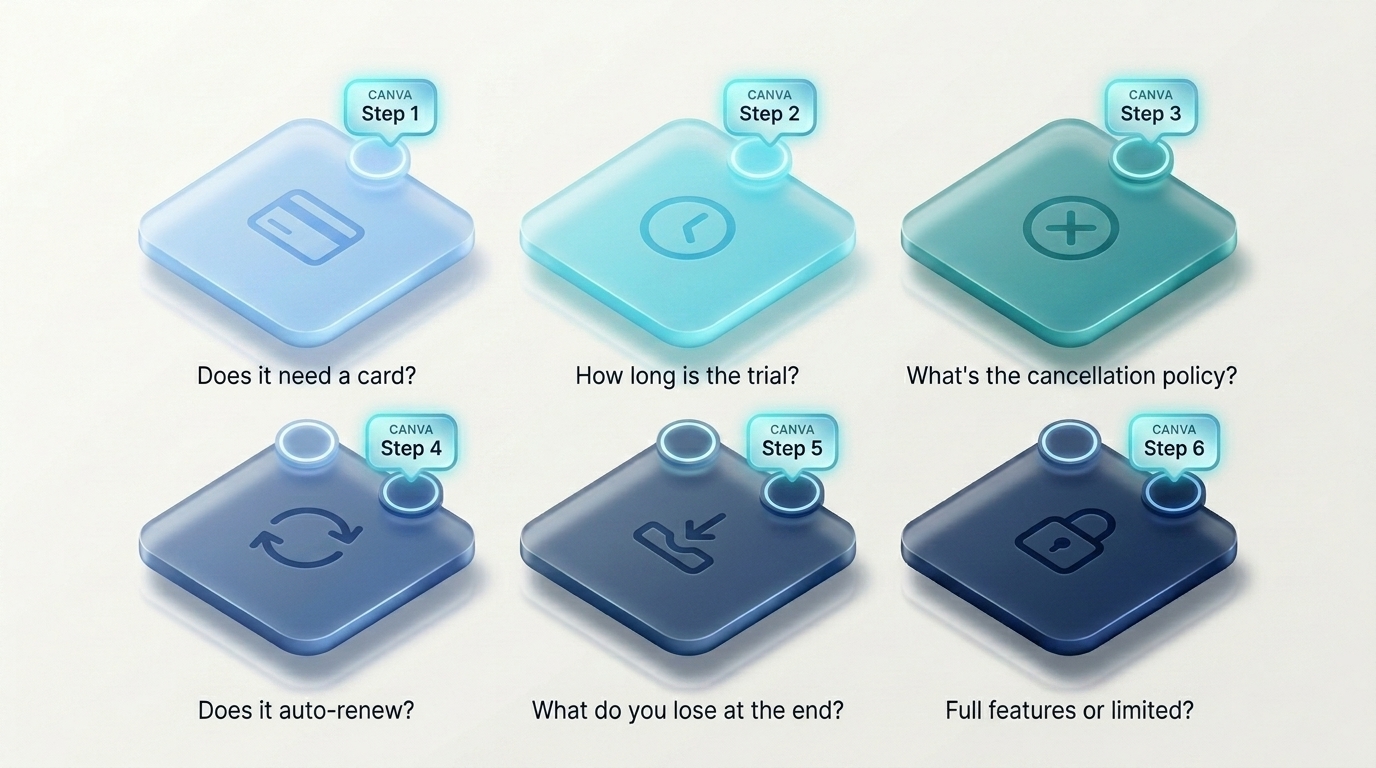
Before you enter any details, run through this checklist. It takes two minutes and saves you money.
- Does it need a credit card? No-card trials are safest, since they can't auto-charge you.
- How long is the trial? 7 days is tight for real testing. 14 days is more realistic.
- What's the cancellation policy? Find the cancel button before you sign up, not after.
- Does it auto-renew? Almost all do. Note the renewal date immediately.
- What do you lose when it ends? Some tools delete your work, projects, or custom setups.
- Is it full features or limited? Some "trials" restrict the very features you want to test.
The auto-renewal trap (and how to avoid it)
This is where most people get burned. You sign up for a 7-day trial, get busy, forget, and two weeks later there's a charge you didn't expect. Some tools make cancellation deliberately hard, a pattern regulators have taken notice of.
How to protect yourself:
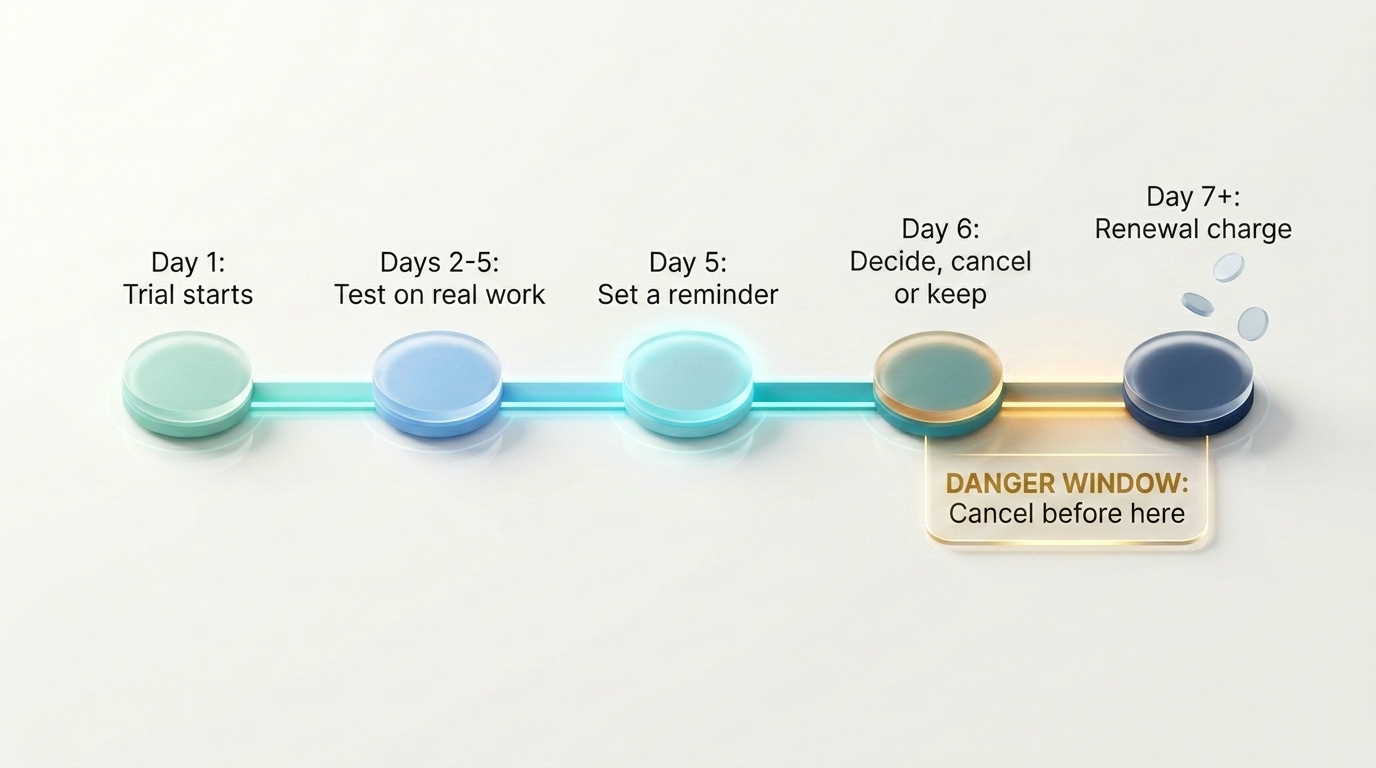
- Set a calendar reminder for two days before the trial ends, the moment you sign up.
- Screenshot the cancellation steps when you first find them.
- Use a card-free trial where possible, so there's nothing to auto-charge.
- Check your subscriptions monthly to catch anything that slipped through.
The Federal Trade Commission's business guidance has repeatedly flagged unclear auto-renewal and "negative option" billing, and rules around easy cancellation have tightened. If a tool makes cancelling genuinely difficult, that itself tells you how they treat customers.
Short answer: How do I cancel an AI free trial before getting charged?
Find the cancellation steps before you sign up, set a calendar reminder for two days before the trial ends, and cancel from your account settings. For card-free trials, there's nothing to charge, so letting it lapse is safe.
Are virtual credit cards safe for AI trials?
A smart question, and yes, they help. A virtual card (a single-use or capped card number from your bank or a service like Privacy) lets you start a trial without exposing your real card, and you can cap or cancel it so it can't be charged after the trial.
They're genuinely useful for trials you're unsure about. Just know some tools reject virtual cards, and using one doesn't remove your need to cancel, it just adds a safety net. Treat it as a backup, not a substitute for cancelling properly.
How to test an AI tool during a free trial
A trial is only worth it if you actually test. Here's how to make the most of the clock:
- Prepare your real task before you start. Don't waste day one figuring out what to test.
- Run your genuine use case, not the demo tutorial. Test the thing you'd actually pay for.
- Push the limits you care about. If you need bulk output, quality, or a specific feature, stress-test it.
- Note what's gated. Some features stay locked even in the trial, so check the paid plan unlocks what you need.
- Decide by day 5 of a 7-day trial, so you're not rushing the cancel-or-keep call.
The thing you'd actually pay for to how to choose the right AI tool.
Which AI free trial is the best?
There's no single best, it depends what you're testing. But here's an honest way to think about it, since this is one of the most-searched questions on the topic.
- For chat and writing, the big assistants (ChatGPT, Claude, Google Gemini, Perplexity) mostly offer permanent free tiers rather than time-limited trials, so you can test them indefinitely with no card. That's better than a trial.
- For creative tools (video, image, design), trials or credit-based free tiers are more common. Look for card-free options first.
- The "best" trial is the one that's card-free, long enough to test properly (14 days beats 7), and gives full features so you're evaluating the real thing.
Short answer: Which AI free trial is the best?
The best AI free trial is card-free, at least 14 days, and full-featured so you can test the real product. For chat tools, permanent free tiers (ChatGPT, Claude, Gemini, Perplexity) beat trials since you can test them with no time limit and no card.
Permanent free tiers to 15 best AI tools with free plans.
What happens when an AI free trial ends?
This catches people out, so know it in advance. When a trial ends, one of three things happens:
- It converts to paid (most common). You're charged unless you cancelled.
- It downgrades to a free tier (if the tool has one). You keep limited access.
- It locks you out entirely, sometimes deleting your projects, custom setups, or generated work.
That last one is the real risk. Before the trial ends, export anything you want to keep, custom prompts, generated content, project files, in case access disappears.
Short answer: What happens to my work when an AI trial expires?
It depends on the tool. Some downgrade you to a free tier and keep your work, others lock or delete it. Export anything important (projects, custom GPTs, generated files) before the trial ends, since not all tools preserve your data.
Hidden" in the sentence below to the hidden costs of AI tools beyond the subscription.
One more thing: even after a trial, watch for hidden costs like credit systems and paid add-ons the trial may have masked. A trial with generous credits can hide how fast a paid plan burns them.
Is it worth paying for an AI subscription after the trial?
Only if the trial proved it. This is the whole point of testing. After your trial, ask three questions:
- Did it save real time or produce real output during the trial? If you can't point to something concrete, don't pay.
- Will you use it regularly? A tool you'd open weekly is worth paying for. One you'd touch monthly usually isn't.
- Does a free tier cover you instead? If the free plan does 90% of what you need, stay on it.
The honest rule: pay for the one or two tools you reach for constantly, and stay free or cancel on the rest.
Short answer: Is it worth paying for an AI subscription? It's worth paying only if the free trial proved the tool saves you time or earns you output, and you'll use it regularly. If a free tier covers most of your needs, or you'd only use it occasionally, don't subscribe. Pay for the one or two tools you use daily.
FAQ
Are AI tool free trials worth it?
Yes, when you test the tool on your real work and cancel before renewal if it doesn't fit. Free trials let you evaluate risk-free. They only become a problem when auto-renewal charges you for something you forgot to cancel. Always check the cancellation policy before entering a card.
Which AI free trial is the best?
The best free trial is card-free, at least 14 days, and full-featured. For chat and writing, permanent free tiers from ChatGPT, Claude, Google Gemini, and Perplexity beat trials, since you can test them with no time limit and no card. For creative tools, look for card-free trials first.
What's the difference between a free trial and a free plan?
A free plan is free forever with feature limits. A free trial gives temporary full access, usually 7 to 14 days, then charges you unless you cancel. Free plans are safe to keep indefinitely; free trials need a cancellation reminder to avoid surprise charges.
Which AI tools have free trials without a credit card?
Many offer card-free trials or permanent free tiers, including ChatGPT, Claude, Google Gemini, and Perplexity for chat, plus tools like Canva and Leonardo AI for creative work. Card-free options are safest since they can't auto-charge you. Verify current terms on each vendor's site.
How do I cancel an AI free trial before getting charged?
Find the cancellation steps before signing up, set a calendar reminder for two days before the trial ends, and cancel from your account settings. For card-free trials, there's nothing to charge, so letting it lapse is safe.
How long do AI free trials usually last?
Most run 7 to 14 days. Seven days is tight for genuine testing, while 14 days gives room to try the tool on real work. Some offer longer trials for annual plans. Always confirm the exact length and renewal date when you sign up.
Are virtual credit cards safe for AI subscription trials?
Yes, virtual or single-use cards let you start a trial without exposing your real card, and you can cap or cancel them so they can't be charged later. Some tools reject them, and they don't remove your need to cancel, but they add a useful safety net.
Is it worth paying for an AI subscription after the trial?
Only if the trial proved the tool saves you time or produces real output, and you'll use it regularly. If a free tier covers most of your needs, or you'd only use it occasionally, don't subscribe. Pay for the one or two tools you use daily.
What happens to my custom GPTs and chats after a trial expires?
It varies. Some tools downgrade you to a free tier and preserve your work, others lock or delete custom setups, projects, and generated content. Export anything important before the trial ends, since not all tools keep your data after expiry.
Key Takeaways
- Free trials are worth it if you test deliberately and cancel before renewal when the tool doesn't fit.
- Free plan vs free trial: a plan is free forever with limits; a trial is temporary and usually auto-charges.
- Check six things before starting: card requirement, length, cancellation policy, auto-renewal, what you lose at the end, and whether features are gated.
- The auto-renewal trap is the main risk. Set a reminder the moment you sign up.
- The best trials are card-free, 14+ days, and full-featured. For chat tools, permanent free tiers beat trials.
- Export your work before a trial ends, since some tools delete it.
- Pay only for the one or two tools you use daily. Stay free or cancel on the rest.
Conclusion
AI tool free trials are genuinely worth it, but only if you treat them as a test with a deadline, not a casual signup. Prepare your real task, check the cancellation terms before you enter a card, set a reminder for two days before renewal, and export anything you want to keep. Do that, and trials become a risk-free way to find the right tool. Skip it, and they become a charge on your card you forgot about.
Want to skip straight to tools you can test for free with no card? See 15 best AI tools with free plans, learn the full method in how to choose the right AI tool, or browse honest, tested reviews at Boost Productivity with These 8 Game-Changing AI Tools before you subscribe to anything.